
Views: 0 Author: Site Editor Publish Time: 2026-03-06 Origin: Site


Jib crane selection often begins with one key question: what size portable jib crane do I need? The right crane size affects lifting safety, workspace coverage, and daily efficiency. A crane that is too small may overload, while an oversized system wastes space and budget. In this guide, we’ll walk through how to choose the correct portable jib crane capacity, boom length, and lifting height. You’ll also see real examples for workshops, warehouses, and manufacturing lines.
Choosing the correct size portable jib crane is not only about lifting power. It directly affects safety, workflow efficiency, and long-term operating costs. A crane that is too small may overload quickly, while one that is too large wastes space, money, and installation resources. For most facilities, the goal is simple: match the crane size to the real lifting task and the available workspace.
Safety is one of the most important reasons to select the right portable jib crane size. If the crane capacity is underestimated, overloading can occur easily. Even a small overload places extra stress on the boom, mast, and hoist system.
Every jib crane has a rated load capacity. This rating typically includes allowances for hoist weight and lifting impact. When operators lift loads beyond this capacity, structural components experience higher stress and wear.
Common problems caused by overloading include:
Excessive boom deflection during lifting
Increased wear on trolley and hoist components
Reduced service life of structural parts
Higher risk of equipment failure
The following table shows how load conditions influence crane safety.
Portable jib cranes depend on a stable base for balance. When the crane size is not matched to the load and boom length, stability may become an issue. Longer boom arms create greater leverage forces, especially when lifting heavy loads at full reach.
Several factors influence crane stability:
Base plate size and support structure
Boom length and working radius
Load position during lifting
Floor strength and surface condition
A properly sized crane distributes these forces more evenly. This helps prevent tipping risks while allowing smooth rotation and lifting.
Crane size also affects how efficiently workers move materials. If the crane reach is too short, operators may need to reposition loads repeatedly. If it is too long, the crane may occupy valuable workspace. The boom length determines the crane’s working radius and the horizontal distance the hook can travel. Matching this reach to the size of the workstation ensures smooth material handling.
Typical boom length recommendations include:
| Workspace Type | Suggested Boom Length |
|---|---|
| Small workstation | 2–3 meters |
| Assembly or fabrication area | 3–5 meters |
| Warehouse handling zone | 5–7 meters |
| Large production floor | 7 meters or more |
A crane that matches the workspace allows operators to move loads efficiently while reducing unnecessary handling steps.
The size of a portable jib crane also influences installation requirements and long-term operating expenses. Larger cranes typically require stronger structures and heavier components. Freestanding jib cranes transfer loads directly to the floor. When capacity increases, the forces applied to the foundation also increase. In some cases, the floor may require reinforcement to safely support the crane. The relationship between crane capacity and foundation requirements often looks like this:
| Crane Capacity | Typical Foundation Requirement |
|---|---|
| 100–500 kg | Standard concrete floor |
| 500 kg – 1 ton | Reinforced base plate |
| 1–3 tons | Thick concrete foundation |
| Above 3 tons | Engineered structural foundation |
Portable models reduce some foundation requirements, but stable support is still essential.
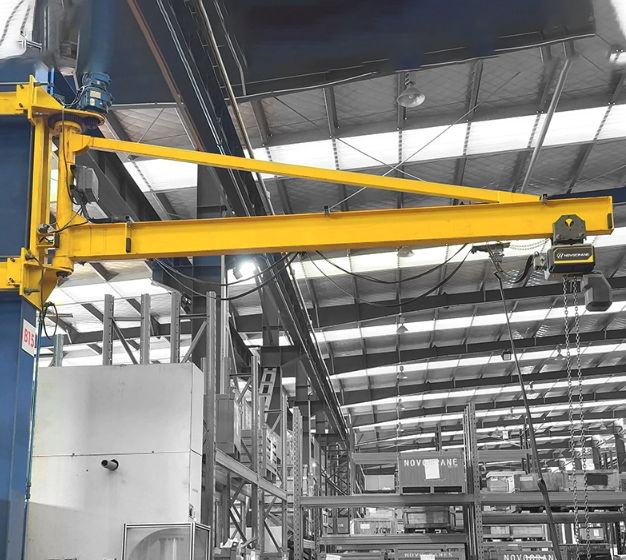
Selecting the right portable jib crane size involves more than lifting strength. We need to consider reach, lifting height, stability, and workspace conditions. Each factor affects how safely and efficiently the crane operates.
Capacity is the starting point for selecting any jib crane. It should always exceed the heaviest load expected during operation.
Rated capacity refers to the maximum load a crane can safely lift. It includes more than just the object being lifted. The hoist and trolley also add weight.
Typical load components include:
Material weight
Hoist weight
Trolley weight
Small impact forces during lifting
Most portable jib cranes fall into several common ranges.
| Duty Level | Capacity Range | Typical Use |
|---|---|---|
| Light duty | 100–500 kg | Assembly stations |
| Medium duty | 500 kg – 1 ton | Maintenance areas |
| Heavy duty | 1–3 tons | Production workshops |
| Industrial | 5+ tons | Heavy manufacturing |
A simple rule helps determine safe capacity.
| Item | Example |
|---|---|
| Maximum load | 800 kg |
| Hoist & trolley (~15%) | +120 kg |
| Impact allowance (~25%) | +200 kg |
| Recommended crane capacity | ≈1.2 tons |
Reach determines how far the crane can move a load horizontally.
Boom length is the horizontal distance from the mast to the hook position. It defines the crane’s working radius.
Different workspaces require different reach distances.
| Workspace Size | Typical Boom Length |
|---|---|
| Small workshops | 2–3 m |
| Medium workstations | 3–5 m |
| Large spaces | 5–10 m |
Longer reach creates greater structural force. Because of this, lifting capacity often decreases as boom length increases.
Measure the area where loads move. Make sure the crane can reach:
Worktables
Machines
Storage areas
Good reach improves workflow.
Vertical clearance is just as important as reach. Height Under Boom (HUB) means the distance from the floor to the underside of the boom. It determines how high loads can be lifted.
Several elements affect lifting height:
Load height
Hoist size
Hook clearance
| Height Element | Example |
|---|---|
| Load height | 1.5 m |
| Hoist size | 0.6 m |
| Clearance | 0.4 m |
| Required HUB | ≈2.5 m |
| Facility Type | Typical HUB |
|---|---|
| Workshops | 3–4 m |
| Warehouses | 4–6 m |
| Industrial plants | Custom |
Total crane height must fit inside the building. Check for obstacles above the crane:
Ceiling beams
Lights
Air ducts
Enough clearance allows smooth rotation. Some floors cannot support very tall or heavy cranes. Engineers often review:
Concrete thickness
Building structure
Doorways, equipment layout, and ceiling height can affect crane size selection.
A stable base keeps lifting operations safe. The base supports the crane during lifting. Larger bases provide better balance.
Forces during lifting include:
Vertical load
Boom torque
Rotation force
| Capacity | Base Type |
|---|---|
| Light duty | Compact base |
| Medium duty | Reinforced base |
| Heavy duty | Large structural base |
Before installation, check floor strength. The surface must support:
Crane weight
Maximum lifted load
Rotation controls how much area the crane covers.
| Rotation | Coverage |
|---|---|
| 180° | Half circle |
| 270° | Wide workstation |
| 360° | Full circle |
More rotation allows operators to move loads between stations easily.
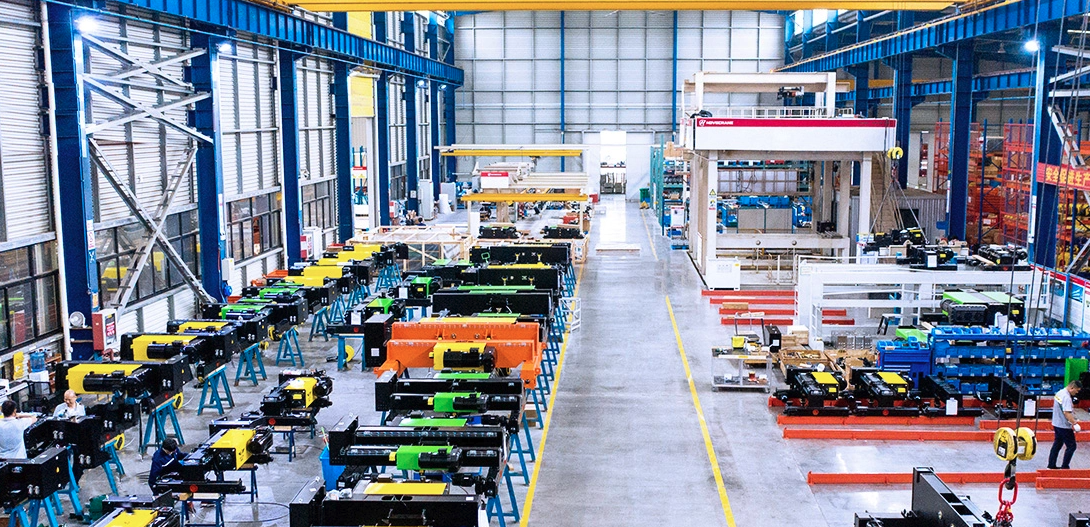
Portable jib cranes are used in many workplaces. Each environment requires different capacity, reach, and height. We usually match the crane size to the lifting task and workspace layout.
| Application | Typical Capacity | Boom Length | Height Under Boom | Common Use |
|---|---|---|---|---|
| Small workshops | 100–500 kg | 2–3 m | 3–4 m | Equipment repair, small parts |
| Manufacturing lines | 500 kg–1 ton | 3–5 m | 4–5 m | Assembly support |
| Warehouses | 1–3 tons | 5–8 m | 5–6 m | Pallet and goods handling |
| Heavy industry | 3–5+ tons | 6–10 m | Custom | Machinery and mold lifting |
Small workshops usually handle lighter parts, tools, and maintenance tasks, so they rarely need large lifting systems. In many cases, a crane capacity between 100 and 500 kg is sufficient, especially for moving small components or assisting equipment repair. The boom length normally stays around 2–3 meters, which allows operators to reach nearby workstations without taking up too much floor space.
Manufacturing and assembly environments require consistent and repeated lifting throughout the production process. Workers often move parts between stations, which makes medium-duty portable jib cranes a practical choice. Typical crane capacities range from 500 kg to 1 ton, while boom reach usually falls between 3–5 meters to cover multiple work positions. Many facilities also install electric hoists, since they reduce manual effort and help improve productivity during frequent lifting tasks.
Warehouses and logistics centers often deal with palletized goods, boxes, and packaged materials, so lifting equipment must handle heavier loads and cover wider areas. Because of this, portable jib cranes in these facilities usually require longer reach and stronger lifting capacity. In many warehouses, crane capacity ranges between 1 and 3 tons, while boom lengths commonly extend 5–8 meters to reach storage areas, loading zones, or truck bays. Electric hoists are widely used here because they help move goods faster during busy operations and reduce operator fatigue.
Heavy industrial plants often move large equipment parts, steel structures, molds, or mechanical assemblies, which require cranes designed for significantly higher loads. In these environments, portable jib cranes must provide both high lifting capacity and strong structural stability. Crane capacities usually begin around 3 tons and may exceed 5 tons depending on the lifting task. The boom reach may extend 6–10 meters or more, allowing operators to cover larger working areas within fabrication shops or machinery plants.
A: Most workshops use portable jib cranes rated 100–500 kg with a 2–3 m boom. This size handles tools, small parts, and repair tasks while fitting compact work areas.
A: Standard boom lengths usually range 2–10 meters. Small workshops use 2–3 m, production areas 3–5 m, and larger industrial spaces 5–10 m.
A: Start with the maximum load weight, then add the hoist and trolley weight. Include a safety margin to handle dynamic loads.
A: Height under boom (HUB) is the vertical distance from the floor to the underside of the boom. It determines the maximum lifting clearance for loads.
A: Some heavy-duty models may need stronger floors or reinforced bases, especially when lifting loads above 1–3 tons.
Choosing the right portable jib crane size comes down to understanding your lifting tasks, workspace layout, and safety requirements. When capacity, boom reach, and lifting height match the job, operators move materials faster and reduce strain on equipment. A properly sized crane also improves workflow and helps prevent costly downtime.
If you’re still wondering what size portable jib crane you need, the engineering team at Novocrane (Suzhou) Co., Ltd. can help evaluate your application and recommend the right solution. From compact workshop cranes to heavy-duty industrial lifting systems, Novocrane designs reliable jib crane systems tailored to real production needs.


