
Views: 0 Author: Site Editor Publish Time: 2026-03-06 Origin: Site
A jib crane is a versatile lifting solution designed to make material handling easier in workshops, warehouses, and maintenance areas. But how do portable jib cranes work, and why are they gaining popularity? These mobile cranes combine vertical lifting, horizontal movement, and rotation to move loads efficiently across tight spaces. They save time, reduce manual labor, and improve workplace safety. In this guide, we’ll explore the mechanics, benefits, and best practices for portable jib cranes, helping you choose the right system for your workflow.
Portable jib cranes lift loads using a hoist, either chain or wire rope. The hoist winds the rope to raise the load, then lowers it smoothly when released. Operators should always check the rated capacity to prevent overload. Safety devices like brakes and limiters stop the crane from dropping heavy loads unexpectedly.
Hoist drives vertical movement
Chain or wire rope options
Always follow load ratings
Brakes and overload limiters ensure safety
| Component | Function | Safety Focus |
|---|---|---|
| Hoist | Lifts and lowers | Avoid exceeding rated load |
| Rope/Chain | Supports load | Inspect for wear before use |
| Limiters | Prevent over-lifting | Stops free fall |
The hoist rides along a trolley that moves along the jib arm. It allows precise load positioning without much manual pushing. They can glide smoothly to reach fixtures, bins, or assembly areas. This reduces worker fatigue and speeds up repetitive tasks.
Trolley travels along the boom
Allows accurate side-to-side positioning
Minimizes manual labor
Improves workflow efficiency
The jib arm can rotate, usually from 180° up to 360°, depending on the model. This gives a fan-shaped or full circular coverage area. Slewing limits prevent collisions or over-rotation, keeping people and equipment safe. It also lets operators place loads anywhere in the working radius without moving the base.
Extends horizontal reach
Rotation angle varies by model
Safety stops prevent crashes
Reduces repositioning time
Portable jib cranes move easily on wheels or forklift pockets. You can relocate it to different workstations or outdoor sites in seconds. This mobility fills gaps that fixed cranes cannot reach. They are especially useful for temporary lifting tasks, small warehouses, or maintenance areas.
Quick relocation anywhere needed
Supports flexible production layouts
Reduces dependency on forklifts or other lifting systems
Saves space and improves workflow
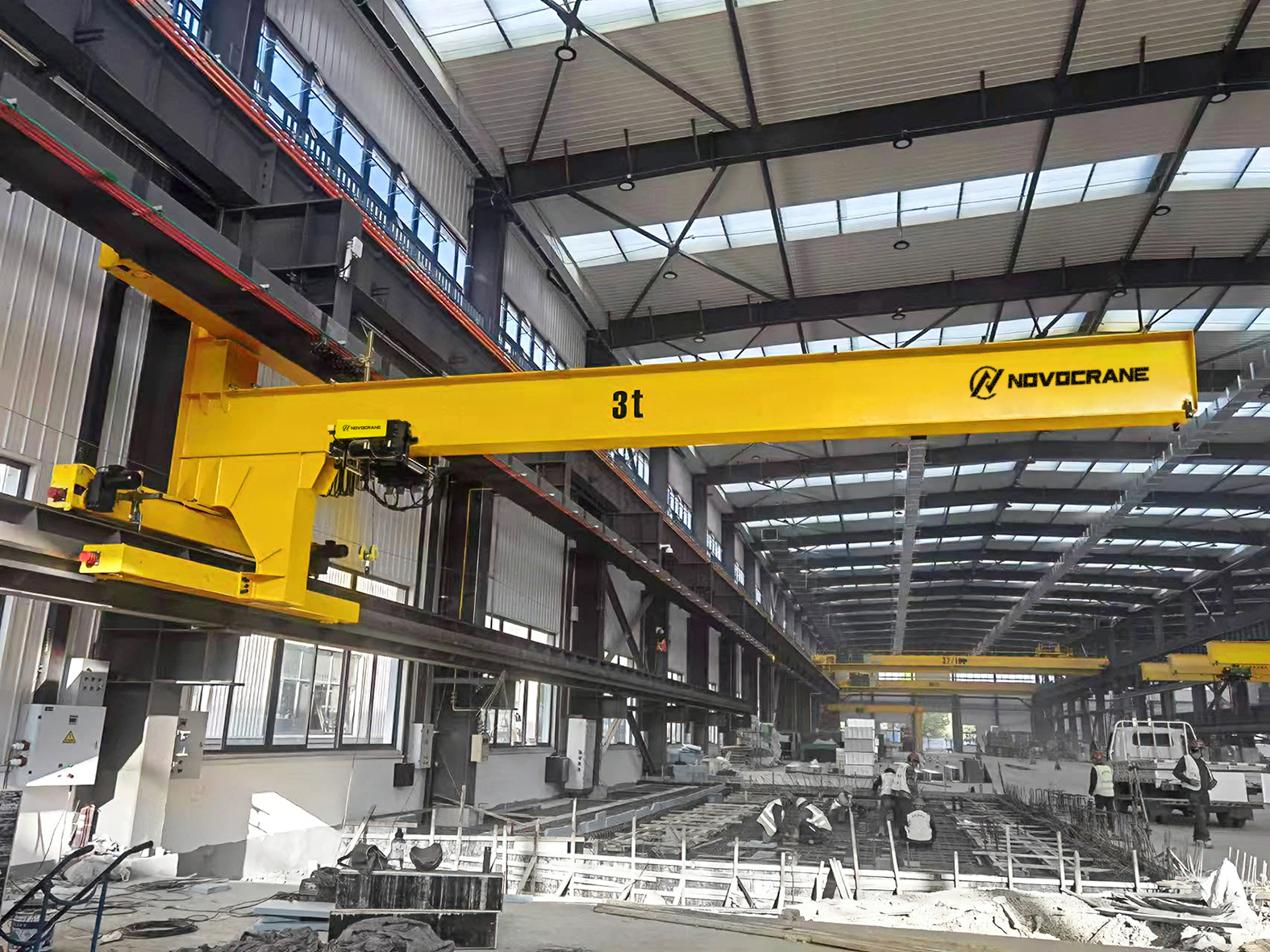
Portable jib cranes can be moved quickly across different workstations. They let operators handle materials anywhere without installing permanent structures. This mobility is perfect for temporary setups, changing layouts, or outdoor operations.
Relocate crane in seconds
Operate in confined or open spaces
Adapt to changing workflows
Reduce dependency on forklifts
By lifting heavy loads mechanically, portable jib cranes reduce worker strain. They help prevent injuries caused by repetitive lifting and awkward positioning. Operators can focus on precision rather than brute force.
Less manual lifting required
Lowers risk of back or shoulder injuries
Improves operator comfort and productivity
Portable jib cranes have a compact footprint. Floor space is minimized, making them ideal for narrow workshops, small warehouses, or temporary work areas. Wall- or column-mounted options further free up space.
Fits tight workspaces
Frees up floors for other equipment
Supports lean manufacturing layouts
These cranes need minimal setup. Some models require no foundation at all. Routine maintenance is straightforward and limited to inspecting hoists, trolleys, and brakes.
Anchor mobile bases on level floors
Check load-bearing surfaces before use
Maintenance Checklist:
| Component | Inspection Frequency | Notes |
|---|---|---|
| Hoist chain/wire | Weekly | Look for wear or fraying |
| Wheels & casters | Monthly | Ensure smooth movement |
| Brakes | Monthly | Test stopping reliability |
| Structural welds | Quarterly | Check for cracks or fatigue |
Portable jib cranes provide high lifting capability at lower cost. They are often cheaper than forklifts, fixed jib cranes, or other large lifting systems. Reduced energy consumption and low maintenance add long-term savings.
| Equipment | Initial Cost | Maintenance | Mobility | Ideal Use |
|---|---|---|---|---|
| Portable Jib Crane | Low | Low | High | Temporary / Flexible |
| Fixed Jib Crane | Medium-High | Medium | Low | Permanent setups |
| Forklift | Medium | Medium | Medium | General transport |
Portable jib cranes must follow ISO 4301 and EN 13155 standards. These rules ensure safe lifting, reliable components, and consistent performance. Operators should always check that the crane meets relevant certifications before use.
Rated load verification
Structural integrity checks
Safety devices installed and functional
Before starting a shift, inspect the crane carefully. This prevents accidents and reduces equipment wear. Focus on:
Hooks and safety latches – no deformation or cracks
Chains or wire ropes – free of frays, corrosion, or kinks
Brakes – operate smoothly and stop reliably
Base and supports – stable and locked
Safe operation is crucial. Even small mistakes can cause injuries or damage. Keep these practices in mind:
Never lift loads over personnel
Check swing radius before moving the jib
Prevent load swing by controlling speed and motion
Avoid sudden starts or stops that may destabilize the crane
Regular inspections maintain safety and prolong crane life. Suggested schedule:
| Component | Frequency | Purpose |
|---|---|---|
| Chain or wire rope | Weekly | Detect wear or fraying |
| Hooks and latches | Weekly | Ensure proper locking |
| Structural welds & frame | Quarterly | Check for cracks or fatigue |
| Wheels, casters & brakes | Semi-Annual | Smooth movement and stopping power |
A: Portable jib cranes handle point-to-point lifting and light to medium loads, reducing forklift use for repetitive tasks, but they do not replace forklifts for long-distance or heavy-duty transport.
A: Most portable jib cranes lift up to 0.5 tons, though some heavy-duty mobile models may reach slightly higher capacities with custom designs.
A: They require no foundation, are easily relocated, and cover smaller areas, while wall-mounted cranes attach to walls and freestanding cranes need fixed foundations and support heavier loads.
A: Inspect chains, hooks, and brakes regularly, lubricate moving parts, tighten fasteners, check wheels, and avoid overloading to ensure durability and safe operation.
A: Yes, with proper anti-corrosion coatings and weather-resistant components, portable jib cranes can operate outdoors, though extreme environments may require additional protection.
Portable jib cranes offer a practical way to lift and move materials anywhere, making workflows faster and safer. Their flexibility, compact design, and easy operation let operators handle repetitive tasks without straining or relying on forklifts.
At Novocrane (Suzhou) Co., Ltd., we provide high-quality portable jib cranes engineered for durability and precision. From light-duty mobile cranes to customized heavy-duty solutions, our products help optimize production, reduce downtime, and enhance safety in every workplace. Explore our range to see how a jib crane can transform your operations.


