
A jib crane is a versatile lifting solution widely used to move heavy materials within a defined workspace. If you work in manufacturing, stone fabrication, or warehouse operations, understanding what a jib crane is can help you choose the right lifting equipment. These compact crane systems allow precise positioning of loads while saving floor space. In this guide, we explore how a jib crane works, its key components, common industrial uses, and why many facilities rely on jib cranes for efficient and safe material handling.
Jib cranes are widely used material handling devices designed to lift and move heavy loads within a defined workspace. You will often find them in manufacturing plants, stone fabrication shops, warehouses, and assembly lines where repetitive lifting tasks occur. Unlike large overhead bridge cranes that span entire buildings, a jib crane focuses on a specific work area, allowing operators to lift, rotate, and position materials efficiently within a circular coverage zone.
Because of their compact design and flexible movement, jib cranes are commonly installed near machinery, workstations, or loading areas. They help reduce manual lifting, improve workflow efficiency, and make it easier to handle heavy items such as stone slabs, machine parts, tools, or equipment.
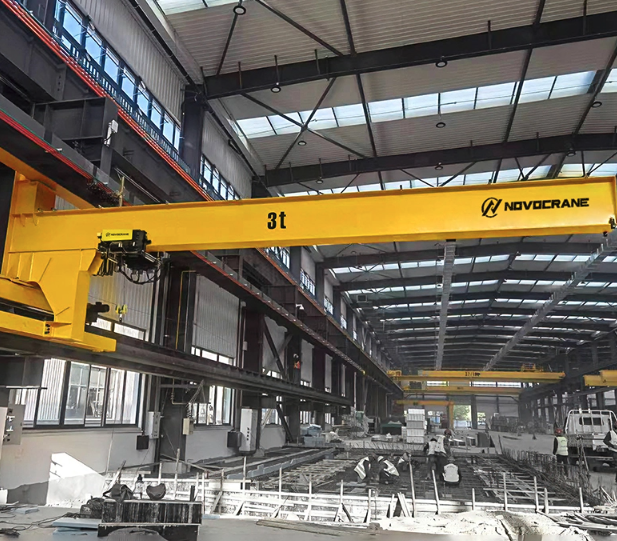
A jib crane is a type of overhead lifting device that uses a horizontal arm mounted to a vertical support structure. The horizontal arm—known as the jib—extends outward from a column, mast, or wall and supports a lifting system such as a hoist and trolley. Unlike full overhead crane systems that travel along long runways, a jib crane works within a localized operating radius. The arm rotates around a pivot point, allowing loads to be positioned precisely without requiring large-scale crane infrastructure.
Key characteristics of a jib crane include:
A horizontal jib arm extending from a vertical support
A lifting device such as a hoist and trolley system
The ability to rotate around a central pivot
Precise positioning of loads within a defined working radius
Because the arm can swing through an arc, operators can easily transfer materials between workstations, machines, or storage areas.

Most jib cranes share several core components, even though designs may vary. Each part helps the crane lift, support, and position loads safely inside a work area.
The jib arm is the horizontal beam extending from the crane’s support structure. It carries the hoist and trolley and supports the lifted load. Its length defines the crane’s working reach and coverage area. A longer arm increases the operating radius, though it may influence lifting capacity depending on design.
Typical roles of the jib arm include:
Supporting the hoist and trolley
Defining the crane’s lifting radius
Carrying loads during horizontal movement
The mast, or column, is the vertical structure supporting the jib arm. It transfers load forces down to the floor or building structure. Most freestanding cranes use a steel column anchored into a concrete base or heavy-duty plate.
Common installation methods include:
Anchoring into a concrete foundation
Bolting to a reinforced floor base plate
Connecting to structural building columns
This vertical support keeps the crane stable during lifting and rotation.
The hoist and trolley system handles the lifting and horizontal movement of loads. The hoist raises or lowers materials using a chain or wire rope. The trolley carries the hoist and travels along the jib arm.
| Component | Function |
|---|---|
| Hoist | Lifts and lowers the load |
| Trolley | Moves the load along the jib arm |
| Hook | Connects the load to the hoist |
Together, they allow precise material positioning during operations.
The rotation mechanism lets the jib arm swing around its support point. Operators move loads across the crane’s working area through this motion. Smaller cranes usually rotate manually. Larger models may use powered rotation systems.
Common rotation ranges include:
180° for wall-mounted cranes
270° for certain floor-mounted systems
360° for freestanding jib cranes
The base plate or mounting structure secures the crane to the floor or building frame. It absorbs the forces created during lifting and rotation.
Typical mounting options include:
Steel base plates bolted into reinforced concrete
Embedded foundation anchors
Structural beam connections for wall or ceiling systems
A jib crane plays an important role in many industrial environments. It helps operators move heavy loads safely and efficiently within a limited workspace. Because the arm can rotate around a fixed support, materials can be transferred between machines, workstations, or storage areas without complex handling equipment. Industries such as manufacturing, stone fabrication, logistics, and equipment maintenance often rely on jib cranes to improve workflow and reduce physical strain on workers.
One of the most common uses of a jib crane is lifting and moving heavy materials during daily operations. In many facilities, workers must repeatedly transfer parts, tools, or equipment between machines. A jib crane allows these tasks to be completed quickly and safely.
Typical lifting applications include:
Moving heavy machine parts or components during production
Loading materials onto processing equipment
Unloading finished products after machining or assembly
Positioning tools or fixtures for specific operations
The hoist performs the vertical lifting while the trolley travels along the jib arm. This combination allows operators to position loads precisely without unnecessary manual effort.
| Industrial Task | How a Jib Crane Helps |
|---|---|
| Machine loading | Positions heavy parts accurately |
| Equipment movement | Reduces manual lifting risks |
| Production handling | Transfers materials between stations |
Stone fabrication workshops frequently use jib cranes to handle large slabs and heavy stone blocks. Materials such as granite, marble, and engineered stone can weigh hundreds of kilograms. Moving them manually increases the risk of injury or product damage. Jib cranes assist stone processing operations by supporting machines and improving positioning accuracy.
Common uses in stone workshops include:
Lifting slabs onto cutting tables or CNC machines
Positioning stone pieces for polishing or edging
Moving finished pieces between fabrication stations
Handling large blocks during shaping and trimming
The rotating arm allows operators to adjust the load angle and placement easily, which helps protect fragile stone surfaces during handling.
Many manufacturing facilities install jib cranes directly at production workstations. Each crane supports a specific work cell, allowing workers to handle parts without leaving their station. This setup improves production efficiency and reduces unnecessary movement across the factory floor.
Typical workstation tasks include:
Positioning metal parts for welding or machining
Moving molds, dies, or tooling components
Transferring parts between assembly steps
Supporting repetitive lifting operations
Because the crane covers a defined working radius, operators can maintain a consistent workflow throughout the production process.
In warehouses and distribution centers, jib cranes help move goods between storage areas, packing stations, and loading zones. They are especially useful in locations where forklifts have limited access or where precise lifting is required.
Examples of warehouse applications include:
Lifting packages onto pallets
Moving items between shelving or storage racks
Transferring goods to conveyors or packing stations
Assisting loading and unloading operations
By simplifying these tasks, jib cranes help improve overall workflow efficiency while reducing worker fatigue.
| Warehouse Activity | Benefit of Using a Jib Crane |
|---|---|
| Pallet handling | Faster and safer lifting |
| Storage transfers | Smooth movement in tight spaces |
| Packing stations | Efficient handling of heavy goods |
Maintenance teams also rely on jib cranes when servicing heavy machinery. Many industrial machines contain motors, pumps, or gearboxes that are difficult to remove manually. A jib crane provides controlled lifting during inspection, repair, or replacement procedures.
Maintenance-related applications often include:
Removing electric motors from equipment
Lifting pumps or gearboxes for inspection
Holding heavy tools during repair work
Installing replacement machine components
Technicians guide the hoist carefully during these tasks, ensuring that components are positioned accurately and safely during maintenance operations.
One major advantage of a jib crane is its ability to position loads accurately. The rotating arm allows operators to guide materials exactly where they are needed. Workers can move components slowly and place them carefully during assembly or machining tasks. The hoist lifts the load vertically, while the trolley moves along the jib arm. Rotation around the column adds another level of control. Operators adjust the position until the load aligns correctly.
Typical precision handling tasks include:
Positioning parts onto machinery
Aligning heavy components during assembly
Placing materials into fixtures or molds
Adjusting load angle during lifting
This level of control improves product handling and reduces accidental damage.
Jib cranes help speed up production by simplifying material movement. Workers no longer need to manually carry heavy parts between machines. Instead, they lift the item once and guide it to the next workstation. This smooth transfer saves time during repetitive tasks. Production lines benefit the most because materials move faster between each step.
Common productivity improvements include:
Faster loading and unloading of machines
Quick transfer of materials between workstations
Reduced downtime during lifting operations
Improved workflow inside production cells
| Production Task | Productivity Benefit |
|---|---|
| Machine loading | Faster setup between operations |
| Assembly work | Smooth transfer of components |
| Workstation handling | Less manual transport time |
Heavy lifting often causes workplace injuries. Workers may strain muscles or lose control of large objects. Jib cranes reduce this risk by handling the lifting work mechanically. Operators control the movement using a hoist and trolley system. They guide the load instead of carrying it. This reduces stress on the body and lowers accident risks.
Safety improvements often include:
Reduced manual lifting tasks
Lower risk of back or shoulder injuries
More stable load handling
Better control during heavy material movement
Many factories install jib cranes specifically to improve worker safety during repetitive lifting tasks.
A: A jib crane is used to lift and move heavy materials within a limited workspace. It helps position equipment, parts, or raw materials between machines or workstations. Many factories, warehouses, and workshops use it for loading machinery, handling stone slabs, or supporting assembly operations.
A: The lifting capacity depends on the crane design and size. Small systems may lift around 100–500 kg, while standard industrial jib cranes handle 250 kg to 5 tons. Heavy-duty models can lift up to 10–15 tons in specialized applications.
A: The reach of a jib crane is determined by the length of its horizontal arm. Typical spans range from about 3 to 9 meters. Larger industrial designs may extend even further depending on structural support and lifting capacity.
A: Many industries use jib cranes, including manufacturing, construction material processing, logistics, and machinery maintenance. Stone fabrication shops, metal workshops, warehouses, and assembly plants rely on them for efficient material handling.
A jib crane offers a practical way to handle heavy materials while maintaining precision, safety, and efficiency in daily operations. From manufacturing workstations to stone workshops and warehouses, it helps teams move loads smoothly within a controlled working radius. Choosing the right system can significantly improve workflow and reduce manual strain.
If your facility is planning to upgrade its lifting equipment, Novocrane (Suzhou) Co., Ltd. provides reliable jib crane solutions designed for modern industrial environments. Their expertise in crane design and manufacturing helps businesses achieve safer and more efficient material handling systems.


