


In industrial material handling, selecting the wrong lifting equipment introduces severe safety liabilities and structural risks. Facility managers and procurement teams often struggle to match specific operational demands with the correct mechanical lifting device. You must account for load weight, frequency of use, environmental hazards, and awkward load dimensions. Failing to match these factors leads to premature equipment failure or over-specifying unnecessary motorized capacity. Defining exactly what this equipment is forms the foundation of safe material handling. You must understand how internal mechanics dictate its application. Evaluating the strict criteria for manual versus powered models is the first step. This evaluation helps you engineer a safe, compliant, and highly efficient lifting solution.
Application Dictates Type: Manual chain hoists are optimal for low-frequency, precision-dependent lifts, while electric and pneumatic hoists are required for high-speed, continuous duty cycles.
Capacity is Only the Baseline: Selecting a chain hoist requires evaluating not just the Working Load Limit (WLL), but also headroom constraints, lift height, load positioning requirements, and suspension types.
Duty Cycle Defines Lifespan: Overworking a hoist beyond its standardized duty cycle classification (e.g., ASME/HMI ratings) is the leading cause of mechanical failure and safety incidents.
Compliance is Non-Negotiable: Proper implementation requires strict adherence to structural rigging limits and regulatory standards (such as OSHA and ASME B30.16) for installation, operation, and daily inspection.
Table of Contents
To evaluate suitability, buyers must first understand the mechanical advantage this equipment provides. A chain hoist allows for vertical translation. Vertical translation means lifting, lowering, and precise positioning of heavy or bulky loads. You cannot select the right equipment without understanding the internal physics.
The core function relies on gear reduction. A small input force translates into massive lifting power. Operators or motors apply force to an input mechanism. This force turns a series of internal gears. The gear ratio multiplies the initial force significantly. A single operator can lift multi-ton loads smoothly. The mechanical advantage makes heavy lifting manageable and safe.
The friction brake mechanism is equally vital. Most units utilize a Weston-style brake. This brake automatically engages when the input force stops. It safely holds suspended loads without slippage. The brake ensures stability even with awkward or off-center centers of gravity. The load remains suspended until the operator actively reverses the input motion. This automatic braking prevents catastrophic free-falls.
The exact sequence of mechanical advantage during a manual lift follows a specific path:
The operator pulls the hand chain, rotating the hand chain wheel.
The hand chain wheel engages the friction brake and turns the drive shaft.
The drive shaft rotates the internal gears, multiplying the torque.
The final gear turns the load sheave.
The load sheave pulls the load chain, raising the attached weight.

Understanding the anatomy helps you identify wear and tear. Every component plays a vital role in structural integrity.
Top and Bottom Hooks: Forged steel hooks connect the unit to the anchor point and the load. They feature safety latches to prevent accidental rigging detachment.
Load Chain: This is the primary lifting medium. It is typically made from Grade 80 or Grade 100 heat-treated alloy steel. The chain withstands immense tensile stress.
Hand Chain: Found only on manual units. Operators pull this continuous loop to activate the internal gearing.
Internal Load Sheaves and Sprockets: These grooved wheels guide the load chain. They feature precise pockets that grip the chain links securely during movement.
Internal Gearing: A system of spur gears or planetary gears. They provide the necessary mechanical advantage for lifting.
Protective Outer Housing: A durable metal casing. It protects internal gears and brakes from dust, moisture, and impact damage.
Facility managers often confuse different lifting devices. You must clarify the distinction to ensure safe operation. This equipment provides true vertical lifting. It allows for precise load positioning directly below the anchor point. Winches are generally designed for horizontal pulling. Using a winch for vertical lifting often violates safety standards unless specifically rated for it.
Compare chain durability against wire rope alternatives. Chain is often more resilient in rugged, abrasive environments. Wire rope can fray or kink when subjected to harsh conditions. Chain links resist crushing and abrasion better than wire strands. Wire rope units are typically reserved for extremely high capacities or very long lifts. For most standard industrial environments, chain provides superior durability and easier inspection.
Feature |
Chain Hoist |
Wire Rope Hoist |
Winch |
|---|---|---|---|
Primary Application |
Vertical lifting, precise positioning |
High-capacity vertical lifting, long lifts |
Horizontal pulling, towing |
Lifting Medium |
Grade 80/100 alloy steel chain |
Braided steel wire rope |
Wire rope or synthetic cable |
Durability |
High resistance to abrasion and impact |
Susceptible to kinking and fraying |
Varies based on cable material |
Maintenance |
Simple visual inspection, easy lubrication |
Requires careful inspection for broken wires |
Requires spooling management |
Matching the equipment type to the application is mandatory. Different environments require different power sources and operational mechanisms.
Manual chain hoists use hand-operated chains and gears to lift loads without electricity. They are suitable for occasional lifting, remote construction sites, and precise load positioning. Their simple structure offers portability and low maintenance costs, but lifting speed is limited by operator effort.
Lever hoists use a ratcheting handle to lift, pull, or tension loads. Their compact design makes them ideal for confined spaces, pipe alignment, structural installation, and rigging applications. They provide flexible load control where traditional hand chain hoists may be difficult to operate.
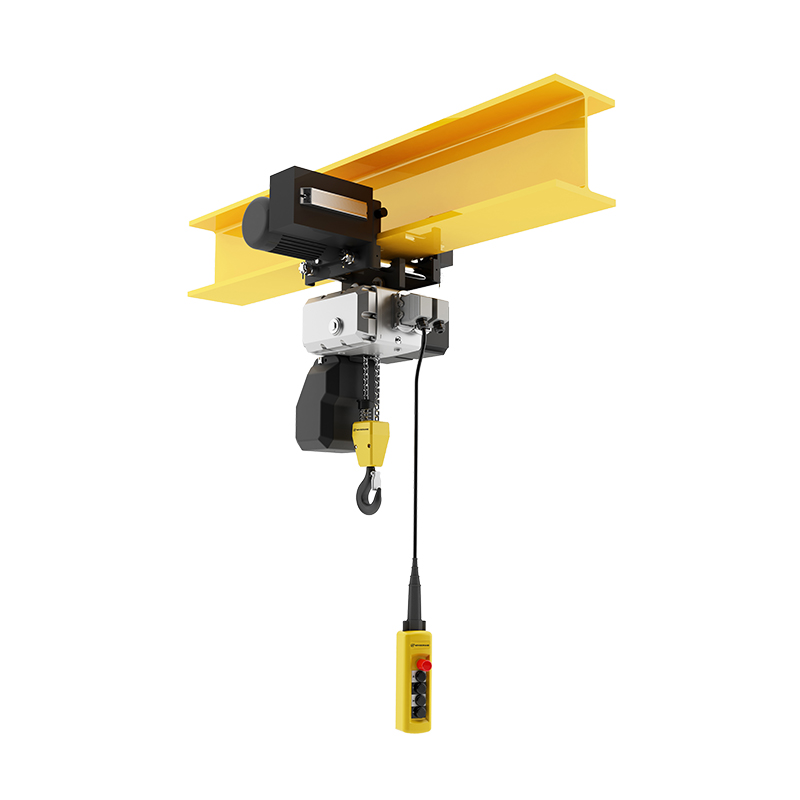
Electric chain hoists use motor-driven lifting mechanisms for fast, efficient, and repetitive material handling. They commonly feature limit switches, overload protection, and pendant or remote controls. Single-speed, dual-speed, and Variable Frequency Drive (VFD) options support different lifting requirements, making them suitable for manufacturing, warehouses, and industrial facilities.
Pneumatic chain hoists operate using compressed air, making them suitable for frequent lifting and demanding industrial environments. Appropriately certified models can be used in hazardous or potentially explosive areas. They provide reliable operation for applications such as chemical processing, offshore facilities, and industrial assembly lines, but require a suitable compressed air supply.
Procurement requires strict technical evaluation. You cannot purchase lifting equipment based on guesswork. You must calculate exact operational parameters.
Working Load Limit (WLL) determines the maximum load a hoist can safely lift. Capacity selection must account for the total weight of the load, slings, shackles, and other lifting accessories. Dynamic forces and shock loading can increase equipment stress. Choosing an appropriately rated hoist helps prevent overloading and ensures safe lifting operations.
Lift height and headroom determine whether a hoist fits the available workspace and lifting requirements. Low-headroom hoists are suitable for facilities with limited ceiling clearance. Buyers should also consider load dimensions, rigging height, chain length, and pendant positioning to ensure safe and efficient material handling.
Hoist duty classification indicates how frequently and intensively lifting equipment can operate. HMI classifications typically range from H1 to H5, covering light to severe-duty applications. Selecting the appropriate class requires evaluating lifting frequency, average load, motor running time, and starts per hour to prevent overheating and premature wear.
HMI Class |
Typical Application |
Max On-Time (Min/Hr) |
Max Starts/Hr |
|---|---|---|---|
H1 |
Infrequent handling, standby use, maintenance. |
7.5 |
75 |
H2 |
Light machining, infrequent assembly operations. |
7.5 |
75 |
H3 |
General machine shop fabrication, assembly. |
15 |
150 |
H4 |
High volume handling, heavy machine shops. |
30 |
300 |
H5 |
Bulk handling, continuous extreme duty. |
Continuous |
600 |
The equipment must attach securely to the facility structure. Evaluating mounting options is a mandatory procurement step. Hook mount units suspend from a stationary anchor point. Lug mount units bolt directly to a structure or trolley, reducing headroom.
Horizontal travel requires trolley integration. Push/pull trolleys require the operator to manually push the load along the beam. Geared trolleys use a hand chain to move heavy loads horizontally with precision. Motorized trolleys use an electric motor for fast, effortless horizontal travel. You must match the trolley type to the facility’s exact I-beam or crane bridge specifications. Incorrect flange width adjustments lead to catastrophic derailments.
Evaluating the long-term value of lifting equipment requires looking beyond the initial purchase. You must analyze operational efficiency, maintenance demands, and environmental suitability.
Analyzing the trade-off between upfront costs and long-term productivity is essential. Manual units require a lower initial investment. However, they demand significant physical labor and operate slowly. Electric models require a higher upfront investment but deliver substantial labor savings. They increase lifting speed and overall facility throughput. If a facility performs dozens of lifts per shift, the electric model quickly pays for itself through increased productivity.
Regular hoist maintenance helps extend equipment lifespan, improve lifting safety, and reduce unexpected downtime. Key tasks include chain lubrication, brake inspection, and checking load chain elongation against manufacturer limits. Buyers should also consider OEM spare parts availability, local technical support, and periodic inspection costs when evaluating long-term maintenance expenses.
Standard equipment degrades rapidly in harsh environments. Evaluating the return on investment for environmental upgrades is necessary. Facilities with high moisture or chemical exposure benefit from corrosion-resistant chains and weatherproof housings. Food processing plants require food-grade lubricants to prevent contamination. Chemical plants and refineries often mandate ATEX-certified explosion-proof housings. Matching the equipment's environmental rating to the facility conditions prevents premature failure.
A properly specified lifting device serves as a foundational piece of material handling equipment. Its operational value depends entirely on accurate specification. You must match the power source, capacity, speed controls, and duty cycle to your exact environment. Follow these action-oriented steps to finalize your selection:
Identify all environmental constraints first, including available power infrastructure, explosive hazards, and extreme temperatures.
Determine the absolute maximum load weight, factoring in the weight of all below-the-hook rigging hardware.
Measure your facility's exact headroom constraints and specify the required lift height and pendant length.
Calculate your required duty cycle by estimating maximum motor run-time and starts per hour to prevent premature burnout.
Consult a certified rigging engineer to conduct a site audit and verify your structural support beams before installation.
A: A lever hoist uses a ratcheting handle mechanism. It can pull horizontally, lift vertically, or tension loads in confined spaces. A standard manual chain hoist uses a continuous hand chain. It is designed strictly for vertical lifting and requires the operator to pull the chain downward to raise the load.
A: The hoist capacity must exceed the heaviest load you intend to lift. You must also factor in the weight of any additional rigging hardware, like spreader beams or heavy slings. Furthermore, the unit must match the facility's duty cycle requirements to prevent motor failure.
A: No. Standard industrial lifting equipment is designed strictly for materials. Lifting personnel requires specialized, heavily regulated man-riding equipment that features redundant safety mechanisms and secondary braking systems. Using standard material equipment for human transport violates OSHA regulations.
A: Maintenance requires daily pre-use visual checks by the operator. You must conduct monthly operational inspections focusing on chain lubrication and brake wear. Furthermore, ASME standards mandate comprehensive annual teardowns and dynamic load tests performed by a certified lifting technician.
A: It utilizes a mechanical friction brake, commonly known as a Weston brake. This system automatically engages the moment the operator stops pulling the hand chain. The friction plates clamp together, preventing the internal gears from reversing and stopping the load from free-falling.
A: Headroom is the physical distance between the hoist's top suspension point and the saddle of the bottom hook when the chain is fully retracted. This measurement is critical for facilities with low ceilings or when lifting bulky, awkward loads that require tall rigging setups.


