
Views: 0 Author: Site Editor Publish Time: 2026-02-04 Origin: Site
A lift looks simple. But what makes it safe? An electrical hoist turns power into lift. It also controls lowering and holding. You’ll learn commands, motor, and gearing. You’ll also see brakes and safety stops.
When the operator presses Up or Down, the electrical hoist first processes that input as a permissioned direction request, not as immediate motor power. The control logic must decide “one direction only” because opposite commands can create electrical conflict and mechanical shock. This is why direction selection is typically interlocked: the system prevents Up and Down from being active together, even if buttons are pressed simultaneously or a switch sticks. Key behaviors to understand from a user perspective:
1. The hoist interprets Up/Down as mutually exclusive states, so only one motion path can be energized at a time. This prevents a control fault from turning into a power fault. It also avoids sudden torque reversal in the drivetrain under load.
2. Direction permission is often conditioned by safety inputs (e.g., not at the upper limit). The operator still “commands,” but the hoist decides whether motion is allowed. This is why a hoist may refuse to lift yet still allow lowering to recover.
The motor is where electrical energy becomes rotating mechanical energy, which the rest of the hoist converts into vertical travel. During lifting, the motor must provide torque that exceeds gravity plus system losses, so electrical demand and heat are typically higher. During lowering, gravity assists motion, so the system’s job shifts toward regulating speed and maintaining stability rather than purely “pulling.” Lift vs lower in practical terms (without marketing claims):
● Lifting loads the motor actively; current rises to generate torque, and the system’s speed depends on available torque margin and drivetrain losses. If torque margin is low, you may see slower travel or a stall-like behavior. The hoist should still behave predictably because the control side is designed for repeated starts and stops.
● Lowering is driven by the load’s tendency to descend; the motor and brake together prevent runaway. A stable hoist makes lowering feel controlled and repeatable rather than accelerating under heavier loads. This is why motor behavior cannot be explained alone without referencing braking and transmission.
Motor rotation is transmitted through the drivetrain and then converted into chain-wheel or rope-drum movement, which produces linear hook travel. The hoist must manage phase transitions consistently because start, steady travel, and stop stress the mechanism differently under load. At start, the system must overcome static friction and inertia without a jerk; at steady travel, it must keep speed stable; at stop, it must remove drive torque and establish holding torque so the load does not drift. The table below summarizes the working cycle as operators experience it, showing which subsystem is “doing the critical job” in each phase. This helps explain why the same electrical hoist can feel different at different loads: phase transitions depend on torque margin, drivetrain compliance, and brake timing rather than on motor power alone.
Working phase | Primary system action | What the hook should do |
Start/engage | Control permits direction, brake releases, motor torque rises | Begin moving smoothly without a jump |
Steady travel | Motor + gearbox maintain output torque and speed | Move at stable speed under constant load |
Stop/transition | Drive command is removed, brake engages to arrest motion | Stop without overshoot or rebound |
Hold | Brake provides continuous holding torque | Remain stable with no creep or drift |
An electrical hoist needs high force at the hook but low speed for safe positioning, while an electric motor naturally produces useful power at higher speeds. Gear reduction bridges that mismatch by lowering speed and multiplying torque, allowing a compact drive to lift rated loads without requiring an impractically large motor. This is the mechanical reason hoists can be both compact and powerful. Two key comparisons clarify the need for reduction:
1. Motor speed vs hook speed: the motor may rotate fast, but the hook must move slowly enough for positioning and collision avoidance. Reduction makes travel speed controllable while keeping the motor in a workable operating range. It also reduces the risk that small button presses create overly large hook motion.
2. Hook force vs motor torque: the hook needs force to overcome gravity, but the motor produces torque at a shaft. Reduction converts torque into higher output torque at the lifting element, so the hoist can lift without the motor operating at extreme current continuously.
The gearbox influences not only “can it lift,” but also “how it feels to place a load.” Drivetrain stiffness affects how directly motor torque becomes hook movement under load, and backlash affects how quickly motion responds when direction changes or when the system transitions between driven and held. These mechanical properties show up most clearly during inching and precise placement. How this presents operationally:
● With more backlash, the hoist may show a small delay or “take-up” when switching between lift and lower or when reapplying motion after holding. That delay is mechanical play being taken up, not a control delay, and it can affect placement accuracy. In stable systems this effect is small and repeatable; large or changing backlash can indicate wear.
● With lower stiffness (more elastic twist), starts may feel softer, but stops may feel less crisp under high load. This is not automatically unsafe, but it changes how operators should expect the hook to respond. In short, control quality is a combined electrical-and-mechanical outcome, not a pendant-only outcome.
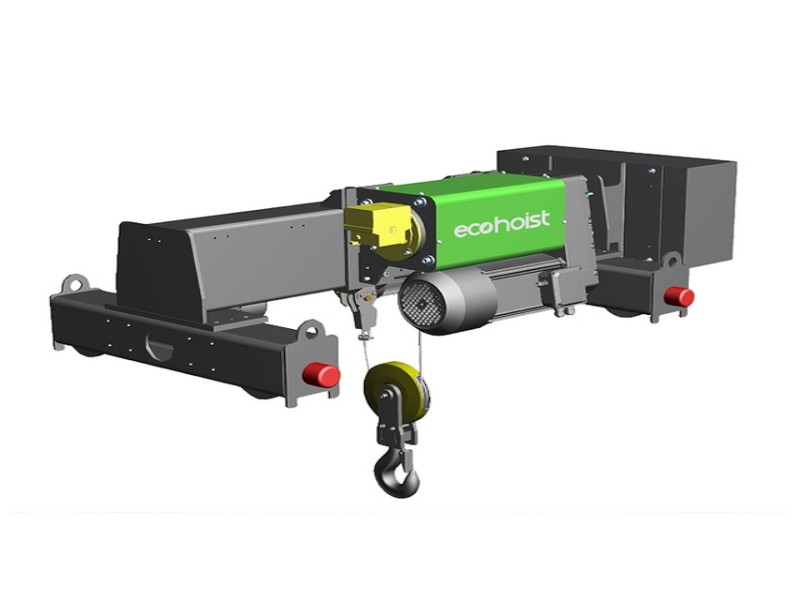
In a chain-based electrical hoist, a pocket wheel engages chain links and pulls the chain through a guided path. Each link seats into a pocket, and that repeated engagement is what turns slow wheel rotation into vertical hook travel. The load path is direct: hook → chain tension → pocket engagement → gearbox output → hoist body and suspension. What matters for “how it works” is engagement consistency. Because the chain engages link-by-link, poor guidance or inconsistent seating can translate into vibration or uneven motion, especially at low speed. A correctly guided chain path keeps link engagement predictable, which supports repeatable positioning and reduces shock loads inside the drive path.
In a rope-based electrical hoist, the drum winds wire rope as it rotates, and the hook moves according to drum rotation and reeving. Rope motion is continuous, but the drum interface introduces spooling behavior: how evenly rope lays and how tension keeps the rope seated. Stable spooling supports stable travel; poor spooling can cause travel variation and localized stress. A rope drum path is therefore not just “wrapping rope.” It is a controlled winding interface where groove geometry and guidance help ensure consistent layering and contact. When layering changes the effective winding radius, the hook travel per drum revolution can vary slightly, so orderly spooling is part of consistent motion.
Topic | Chain hoist load chain path | Rope hoist drum path |
Primary motion interface | Link seats into pocket wheel | Rope contacts and winds on drum |
What “transmits load” | Chain tensile force through engaged links | Rope tension through drum winding and reeving |
What affects travel stability | Chain guidance and consistent seating | Even spooling, tension, and layering behavior |
After the operator releases the control, the electrical hoist must do more than stop moving—it must resist gravity continuously. That is why holding is treated as a primary function, not a side effect of stopping. The brake provides holding torque so the hook position remains stable while a load is suspended. Most hoists use a fail-safe concept at the system level: when power is removed, the brake defaults to an engaged state so the load is held rather than released. The key is that holding behavior should be predictable and repeatable, because unpredictable holding appears as creep (slow descent) or drift (settling beyond expected stop). In mechanism terms, “hold” is a defined operating state with its own torque requirement and response timing.
Brake timing shapes how starts and stops feel and how safe lowering remains under heavier loads. On start, the brake must release cleanly so the motor does not fight a partially engaged brake; otherwise, heat and jerk increase. On stop, the brake must engage in a controlled way so the load does not overshoot, rebound, or swing due to abrupt torque cutoff. A practical stop-and-hold sequence looks like this:
1. Operator releases the button; the drive command is removed, and motor torque decays. The system then transitions from “driving” to “restraining” rather than letting the load decide the outcome. If this transition is slow, drift becomes visible.
2. The brake engages to lock the drivetrain and hold the load. If engagement is inconsistent, creep can occur even without a command, which is a holding-performance issue rather than a speed-control issue.
3. During lowering, the brake and drive must cooperate so the load cannot accelerate beyond the commanded descent. Stable lowering is therefore evidence of coordinated restraint, not merely of motor capability.
The pendant is typically part of a low-power control circuit that carries commands, while the power circuit carries the current that actually runs the motor. This separation allows the hoist to apply safety logic and interlocks before energizing high power, and it keeps the operator interface lighter and less exposed to high-energy switching effects. Functionally, the pendant “requests,” and the internal switching “executes.” A simplified view of the architecture:
● Control side: pendant switches, interlocks, limit inputs, and permissive logic determine whether motion is allowed and in which direction. This side can block unsafe commands without needing to handle motor power directly. It also makes the system easier to diagnose because control signals can be checked independently.
● Power side: switching devices energize the motor according to the permitted direction. High power stays within enclosed components designed for repeated switching, heat, and electrical protection. This division is central to how an electrical hoist converts a small command into safe motion.
Direction switching is commonly implemented by energizing different switching paths for Up vs Down, and interlocking prevents both paths from being active simultaneously. The interlock is the enforcement mechanism behind “single permitted motion direction,” ensuring that a contradictory pendant input cannot create a conflicting power state. This is both an electrical safeguard and a mechanical safeguard, because it prevents torque reversal shock. What interlocking accomplishes in real operation:
1. It prevents simultaneous Up and Down power paths, which can otherwise create a fault condition at the motor switching stage. This reduces the chance that a human input error becomes a high-energy electrical event. It also keeps direction behavior predictable under imperfect button handling.
2. It supports consistent control feel by ensuring direction changes are deliberate and sequenced. The hoist must stop and then reverse, rather than reversing while still driving under load. This reduces drivetrain stress and improves placement repeatability.
Limit switches stop travel near endpoints to prevent the hook block or lifting medium from being driven into unsafe mechanical conditions. The upper limit prevents upward overrun that could cause collision into the hoist body or end stops. The lower limit prevents excessive lowering that could introduce slack, mis-spooling, or mechanical interference depending on the lifting medium. A limit action is not the same as a normal stop. A normal stop is initiated by the operator to end motion at a chosen position; a limit stop is initiated by the hoist to enforce a boundary. The mechanism is directional by design: it blocks travel further into the unsafe direction while allowing movement away from the boundary for recovery.
A limit switch typically interrupts the command path for one direction so the permitted motion signal cannot reach the power switching stage. This design prevents repeated “driving into the end” even if the operator continues pressing the same button. At the same time, the opposite direction remains available so the system can be moved back into a safe travel range. Recovery behavior is part of “how it works,” not an afterthought:
● If the upper limit is reached, Up is blocked while Down remains available so the hook can be lowered to clear the limit. The hoist should not require special actions for basic recovery beyond releasing and commanding the safe direction. This keeps boundary events from escalating into mechanical impacts.
● If the lower limit is reached, Down is blocked while Up remains available so slack or unsafe geometry can be corrected. This directional interruption helps maintain lifting medium integrity and reduces the chance of chain/rope misbehavior caused by over-lowering.
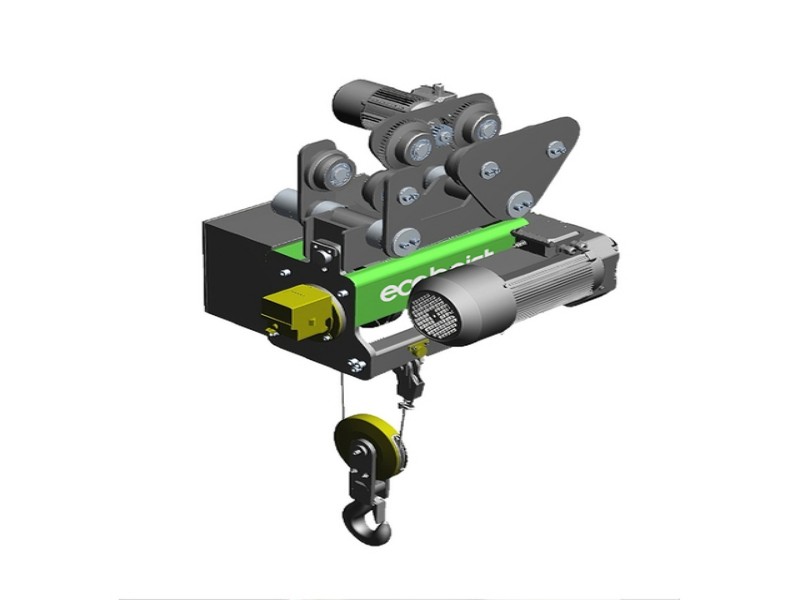
Overload protection prevents lifting when the demanded load exceeds the hoist’s rated capability, which would otherwise raise stress and thermal risk across the drivetrain and lifting medium. Mechanistically, overload protection acts as a permission barrier: it allows normal lifting within rating, but denies or interrupts lift when the system detects an overload condition. The key outcome is that the hoist does not “half lift” unpredictably; it transitions to a non-lift state under overload. How to interpret overload behavior in operation:
1. Overload is about exceeding safe limits, not merely about “feels heavy.” A hoist may still move slightly due to slack take-up or control timing, but sustained lifting is denied when overload is recognized. This prevents the operator from relying on inconsistent partial motion.
2. Overload protection is primarily aimed at preventing continued lift demand beyond design margins. By limiting lift, it reduces the risk of accelerated wear and sudden failure modes. In a working-cycle view, it modifies the command → motion chain by refusing the lift transition.
Abnormal states—especially power loss—must have defined safe outcomes in an electrical hoist because suspended loads cannot depend on continuous power. In a power interruption, the system prioritizes load security and returns to a stable holding condition rather than attempting to maintain motion. This is why braking philosophy and control restart behavior matter for safety as much as lifting capability. A clear abnormal-response expectation looks like this:
● Power loss while holding should result in continued holding without operator action, because the hoist must not rely on active drive torque to resist gravity. When power returns, the hoist should not resume motion automatically; it should require an intentional new command. This prevents unexpected movement after a transient outage.
● Protective shutdowns (triggered by safety conditions) should force a stable stop and block unsafe re-command until the triggering condition is cleared. The system’s priority becomes preventing escalation, even if that interrupts the task. In “how it works” terms, abnormal response is the hoist enforcing safety-state transitions when normal operation is no longer valid.
An electrical hoist starts with a direction command. It turns power into motor rotation. Gearing shapes torque for lifting. Chain or rope moves the load. A brake holds the hook in place. Limits and protections stop unsafe travel. Novocrane (Suzhou) Co., Ltd. supports these systems. Their hoists add stable control and service value.
A: An electrical hoist routes the command through interlocked control, powers the motor, then transmits torque via gearing to move the chain wheel or rope drum.
A: An electrical hoist uses a fail-safe brake to hold the load after motion, limiting drift and preventing unintended lowering.
A: An electrical hoist limit switch interrupts the permitted travel direction at end-of-travel, while allowing reverse motion for recovery.
A: An electrical hoist uses reduction gearing to convert high motor speed into low-speed, high-torque lifting at the hook.


