
Views: 0 Author: Site Editor Publish Time: 2026-02-04 Origin: Site
Lifting heavy loads safely is a common challenge in many workplaces.
This is why the term electrical hoist is searched so often.
An electrical hoist helps move loads up and down with control and consistency.
It is widely used in material handling and maintenance tasks.In this article, you will learn what an electrical hoist is, how it works,
its main components, and how to understand basic selection needs.
An electrical hoist is an electrically powered lifting device designed specifically for vertical lifting and lowering of loads. Unlike manual hoists, it relies on an electric motor to generate lifting force, allowing operators to handle heavier loads with consistent speed and reduced physical effort. In practical terms, an electrical hoist converts electrical energy into controlled mechanical motion, making repetitive or precision lifting safer and more predictable in daily operations.
From a functional standpoint, the role of an electrical hoist is intentionally narrow. Its core task is to raise and lower a load along a vertical path in a controlled manner. It does not inherently move loads horizontally or position them across a workspace; those functions depend on external systems such as trolleys, beams, or cranes. Understanding this boundary is important because it helps users correctly evaluate what an electrical hoist can and cannot do within a lifting setup, reducing misuse and unrealistic expectations.
To clarify its scope, the table below summarizes what is considered inside and outside the core definition of an electrical hoist:
Aspect | Included in Electrical Hoist Function | Outside Core Function |
Load motion | Vertical lifting and lowering | Horizontal travel or positioning |
Power source | Electric motor | Manual force or hydraulic drive |
Control | Start, stop, lift, lower | Automated routing or load steering |
Purpose | Controlled load handling | Complete material transport system |
In real-world use, electrical hoists appear across a wide range of environments because vertical lifting is a common requirement. In industrial settings, they are frequently used on production lines, assembly stations, and maintenance bays where loads must be lifted repeatedly to a fixed height. In commercial facilities such as warehouses or service workshops, electrical hoists support equipment handling, storage access, and repair tasks. They are also common in maintenance contexts, where reliability and predictable lifting behavior are more important than speed or automation.
Across all these environments, the defining value of an electrical hoist lies in its ability to provide controlled, repeatable lifting with minimal operator strain. This consistent definition helps engineers, operators, and planners communicate clearly about requirements and ensures the device is selected and applied for the role it is actually designed to perform.
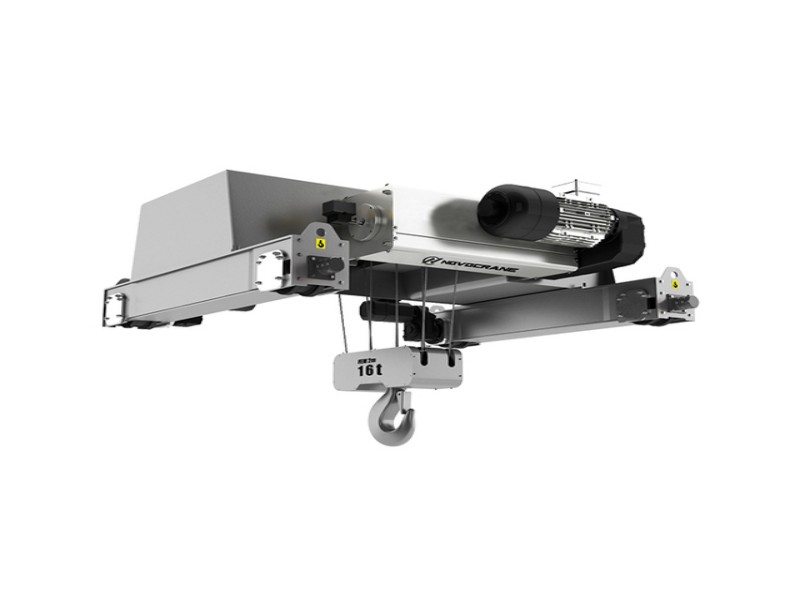
An electrical hoist operates by converting electrical energy into controlled vertical lifting motion. While the overall concept is straightforward, the working process involves several coordinated mechanical and electrical stages that ensure the load moves smoothly, safely, and predictably. Understanding this workflow helps users judge whether a hoist is suitable for a specific lifting task and how its design influences performance and reliability.
At the starting point, electrical power is supplied to the hoist’s motor through a fixed connection or flexible cable system. When the operator issues a lift or lower command, the motor is energized and begins to rotate. This rotational force is the primary source of lifting energy, replacing manual pulling or pumping with consistent, electrically generated motion. Because the motor speed is relatively high and optimized for efficiency rather than raw lifting strength, it cannot be applied directly to the load.
To make the motor’s output usable, the hoist relies on a gear reduction system. This system reduces rotational speed while multiplying torque, transforming fast motor rotation into slower, more powerful movement capable of lifting heavy loads. The relationship between speed and force is fundamental: higher reduction ratios provide greater lifting capacity at lower speeds, while lower ratios allow faster lifting with reduced load limits. This balance is engineered into the hoist based on its intended application.
Once torque is transmitted through the gear system, it is applied to the lifting medium—either a load chain or a wire rope. The choice of lifting medium determines how motion is transferred to the load, but the working principle remains the same: controlled rotation results in precise vertical movement. The operator does not manage this mechanically; instead, movement is governed through a control interface that sends electrical signals to the motor.
In practical operation, this process can be summarized as follows:
● Electrical input activates the motor and defines direction.
● Reduced-speed, high-torque output drives the lifting mechanism.
● The chain or wire rope moves incrementally to raise or lower the load.
● Movement continues only while the control command is active.
The table below shows how each stage contributes to the lifting process:
Stage | Main Function | Result for the Load |
Motor | Generates rotational force | Provides initial lifting energy |
Gear reduction | Converts speed into torque | Enables heavy-load lifting |
Lifting medium | Transfers motion to load | Raises or lowers vertically |
Control input | Starts and stops motion | Ensures operator control |
A critical aspect of how an electrical hoist works is what happens when lifting stops. When the operator releases the control, the load must remain suspended without drifting downward. This is achieved through a holding mechanism, typically an integrated brake system designed to engage automatically when power is removed from the motor. Rather than relying on continuous electrical input, the brake uses mechanical force to lock the lifting system in place.
This holding behavior is not an emergency feature but a normal part of daily operation. It ensures that loads remain stable during pauses, alignment checks, or positioning adjustments. In maintenance and industrial environments, this predictable holding function is essential for both safety and workflow efficiency, as it allows operators to focus on the task rather than constantly managing load stability.
Taken together, these stages explain how an electrical hoist delivers controlled vertical lifting. By combining electrical power, mechanical reduction, guided load movement, and automatic holding, the hoist provides a reliable lifting solution that fits seamlessly into a wide range of industrial and commercial applications.
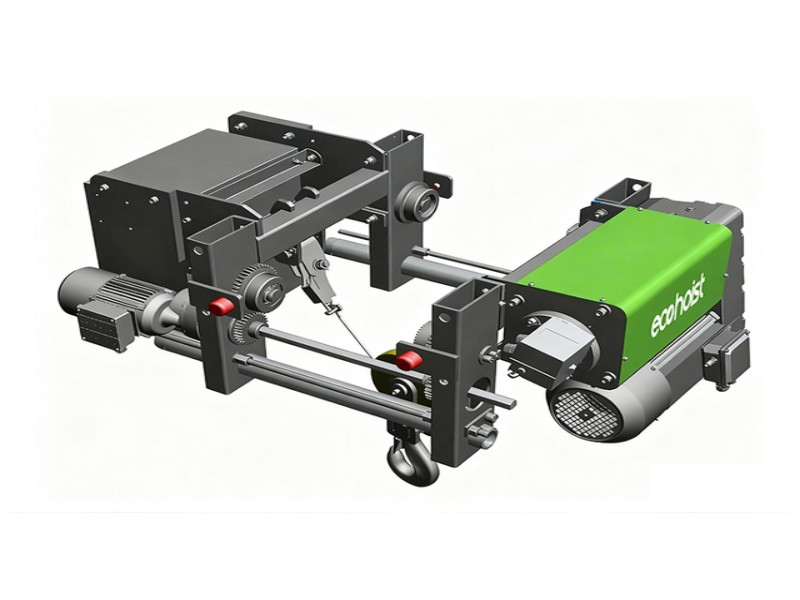
An electrical hoist is made up of several interdependent component groups, each responsible for a specific function in the lifting process. Rather than operating as isolated parts, these components form a system in which load handling, power transmission, control, and protection work together. Understanding these components helps users assess performance limits, maintenance needs, and operational safety without relying on brand-specific claims.
The load-bearing components are the parts that directly support and transfer the weight of the load. At the lowest point of the system is the hook assembly, which serves as the physical connection between the hoist and the load. The hook is typically designed with a safety latch to reduce the risk of accidental disengagement during lifting or lowering. Because this interface experiences the full working load, its condition is often the first indicator of improper use or overload.
Above the hook, the primary load carrier—either a chain or a wire rope—transmits lifting force from the hoist body to the load. While both serve the same purpose, they behave differently under stress, wear, and repeated use. The table below highlights their functional roles rather than promotional differences:
Component | Role in Load Handling | Practical Considerations |
Hook assembly | Connects hoist to load | Must maintain shape and latch integrity |
Load chain | Carries load through linked segments | Sensitive to elongation and surface wear |
Wire rope | Carries load through stranded cable | Sensitive to abrasion and broken strands |
Together, these elements define the physical load path. Any weakness or wear along this path directly affects lifting safety, which is why inspections typically focus on these components first.
The drive system is responsible for generating and transmitting the force required to lift the load. At its core is the electric motor, which converts electrical energy into rotational motion. This motion alone is not sufficient for lifting, so it is routed through a gearbox that reduces speed while increasing torque. The motor–gearbox combination determines how much weight the hoist can lift and how fast it can do so under normal conditions.
Equally important is the holding function, which is handled by the brake system. The brake is designed to engage automatically when power to the motor is cut, preventing unintended load movement. This is not a secondary safety feature but a fundamental part of everyday operation, ensuring that the load remains suspended when the operator releases the control. Without a reliable brake, precise positioning and safe pauses during lifting would not be possible.
Control components allow the operator to command the hoist, while protection components ensure those commands do not push the system beyond safe limits. The most common control interface is a pendant or remote device that provides basic lift and lower commands. These controls translate human input into electrical signals that regulate motor operation, defining both direction and duration of movement.
Protection elements operate mostly in the background but play a critical role in long-term reliability. Overload protection mechanisms limit lifting force when the applied load exceeds the hoist’s rated capacity, reducing the risk of structural damage. Thermal protection monitors motor temperature and interrupts operation if overheating occurs. Together, these elements form a safeguard layer that supports consistent performance under variable operating conditions.
When viewed as a complete system, the parts and components of an electrical hoist illustrate why proper understanding goes beyond knowing a single specification. Load-bearing integrity, drive efficiency, and control protection must align to ensure the hoist performs its intended role safely and predictably in real working environments.
Correctly determining the load capacity of an electrical hoist is not only a technical exercise but a critical step in safe and sustainable operation. Capacity is often misunderstood as a simple weight limit, yet in practice it reflects a set of assumptions about how the hoist is used, how often it operates, and how the load is handled. A clear understanding of these factors helps prevent overload, premature wear, and unsafe lifting conditions.
The rated capacity of an electrical hoist represents the maximum load the hoist is designed to lift under defined conditions. It is established through engineering design and testing, assuming proper installation, vertical lifting, and normal operating parameters. What it does not represent is an all-purpose allowance for any lifting scenario. Side loading, shock loading, or continuous operation beyond design limits are not covered by the rating, even if the numerical load appears to be within bounds.
An important and frequently overlooked factor is the total lifted weight. This includes not only the primary payload but also all rigging and attachments below the hook. Slings, spreader beams, lifting fixtures, and custom attachments all add to the effective load seen by the hoist. The table below illustrates how these elements contribute to the total lifted system weight:
Weight Element | Included in Capacity Calculation | Practical Impact |
Payload | Yes | Main portion of lifted weight |
Slings and shackles | Yes | Often underestimated but cumulative |
Below-hook devices | Yes | Can significantly increase total load |
Hoist self-weight | No | Already accounted for in design |
By accounting for the full lifted system, users avoid the false assumption that the hoist is only reacting to the visible payload.
Beyond static weight, real-world operation introduces additional sizing considerations. One of the most important is duty cycle, which describes how frequently and how long the hoist operates within a given period. A hoist lifting near its rated capacity occasionally behaves very differently from one lifting the same load repeatedly throughout a shift. Higher usage intensity generates more heat in the motor and brake system, accelerating wear even when the nominal load remains unchanged.
Handling behavior also influences effective capacity. Loads that are unevenly balanced, picked up off-center, or accelerated abruptly introduce dynamic forces that exceed static weight calculations. Sudden starts, stops, or load swinging increase stress on the lifting medium and drive components, effectively reducing the safe working margin. When these factors are considered together, capacity calculation becomes a process of matching the electrical hoist not just to a number on a label, but to the realities of how it will be used day after day.
An electrical hoist is an electric lifting device for controlled vertical movement. It converts power into torque to raise, hold, and lower loads safely.
Understanding load capacity, duty cycle, and lifting media helps judge suitability. Clear knowledge supports safer use and informed selection decisions.
Novocrane (Suzhou) Co., Ltd. provides reliable electrical hoist solutions. Their products focus on stable performance, safety features, and responsive service.
A: An electrical hoist lifts and lowers loads vertically using electric power, enabling controlled handling in manufacturing, maintenance, and warehouse environments.
A: An electrical hoist converts electrical energy into torque through a motor and gearbox, then moves a chain or wire rope on command.
A: Selecting an electrical hoist requires accounting for total lifted weight, duty cycle, lift height, and load balance to avoid overload.
A: In an electrical hoist system, chain suits shorter lifts and frequent use, while wire rope supports longer lifts and higher utilization.


