Views: 0 Author: Site Editor Publish Time: 2026-07-31 Origin: Site
Moving heavy loads in facilities where fixed runway structures are structurally impossible or spatially restrictive creates a massive operational bottleneck. Plant managers and rigging engineers constantly face the challenge of balancing high-capacity material handling with the need for flexible, multi-point deployment across dynamic workspaces. When installing a permanent overhead crane is out of the question due to lease agreements, weak roof structures, or changing production layouts, a Mobile Gantry Crane provides a highly adaptable lifting solution. This guide breaks down how to evaluate, specify, and procure the right system. We will cover structural materials, dimensional constraints, setup methods, and industry-specific compliance standards to ensure safe and efficient lifting operations on the shop floor.
Material dictates mobility: The choice between steel and aluminum directly determines the trade-off between maximum load capacity and single-operator portability.
Dimensional precision is critical: Accurate specification requires calculating not just the static load, but dynamic factors like clear span, under-beam height, and facility footprint constraints.
Mobility relies on caster selection: Deploying a crane on improper casters for the specific floor condition (e.g., uneven concrete, cleanroom epoxy) leads to operational failure and safety hazards.
Erection and setup methods impact safety: Selecting the appropriate assembly design (e.g., quick-release pins vs. high-strength bolts) dictates setup time and the crew size required for safe deployment.
Strict compliance is non-negotiable: Safe operation requires adherence to OSHA and ASME standards, specifically regarding load testing, routine inspections, and the strict prohibition of moving standard models under load.
Table of Contents
Evaluating lifting solutions requires a direct comparison of installation requirements, facility structural modifications, and spatial flexibility. Fixed overhead cranes demand substantial structural support, permanent runway installations, and high upfront capital. They lock your material handling path into a rigid grid. Conversely, a portable gantry system requires zero building modifications. This makes it an ideal choice for leased facilities or dynamic manufacturing environments where workstations frequently shift to accommodate new product lines.
Feature | Fixed Overhead Crane | Mobile Gantry Crane |
|---|---|---|
Facility Impact | Requires structural reinforcement and permanent runways. | Zero building modifications required. |
Mobility | Restricted to the installed runway path. | Can be rolled to any location with suitable flooring. |
Installation Time | Weeks to months, requiring facility downtime. | Hours to days, minimal disruption. |
Typical Capacity | Extremely high (up to 100+ tons). | Low to medium (typically 1 to 15 tons). |
Assessing capital expenditure versus operational expenditure helps determine the best procurement route for your facility. Investing in permanent ownership makes sense for continuous, daily operations where the equipment will see high utilization rates. However, leasing or renting provides a practical alternative for specialized, short-term projects, facility relocations, or seasonal production spikes. This approach allows companies to access heavy lifting capabilities without long-term financial commitment or maintenance liabilities.
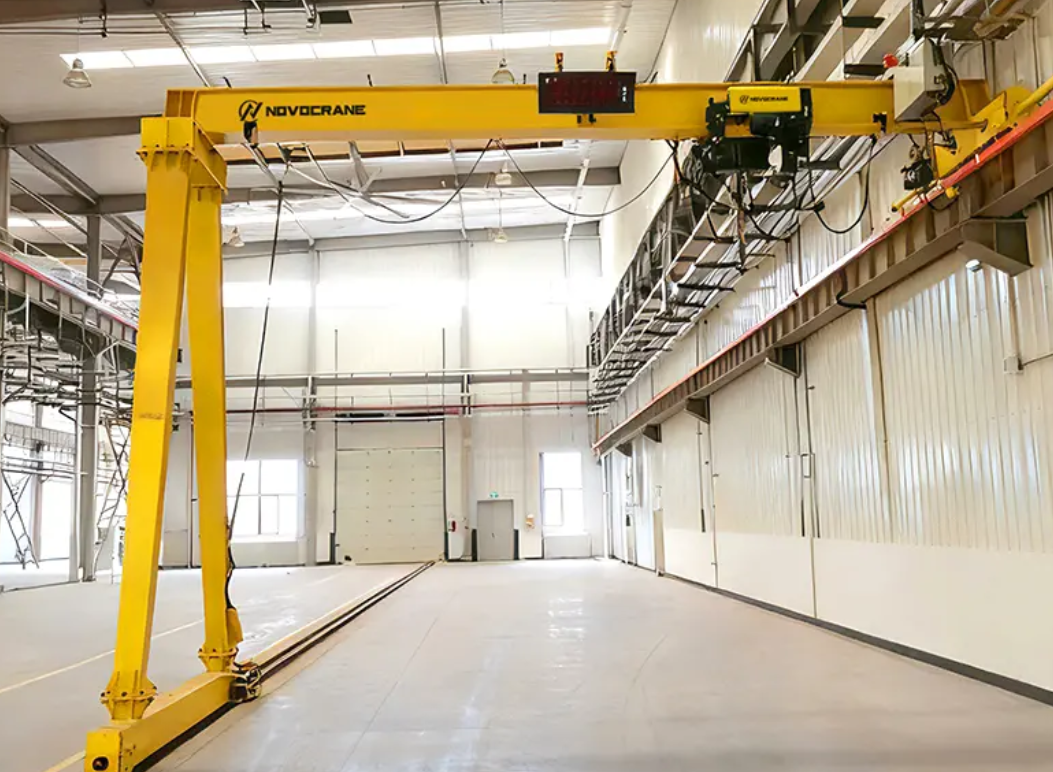
The core advantage of this equipment is portability across multiple workstations without dedicated runway infrastructure. Maintenance crews can position the unit exactly where the lift is needed, whether over a CNC machine for a tool change or over a pump station for motor replacement. Furthermore, rapid assembly and disassembly capabilities allow for quick field deployment and efficient operations within confined spaces, mezzanines, or remote job sites where bringing in a boom truck is impossible.
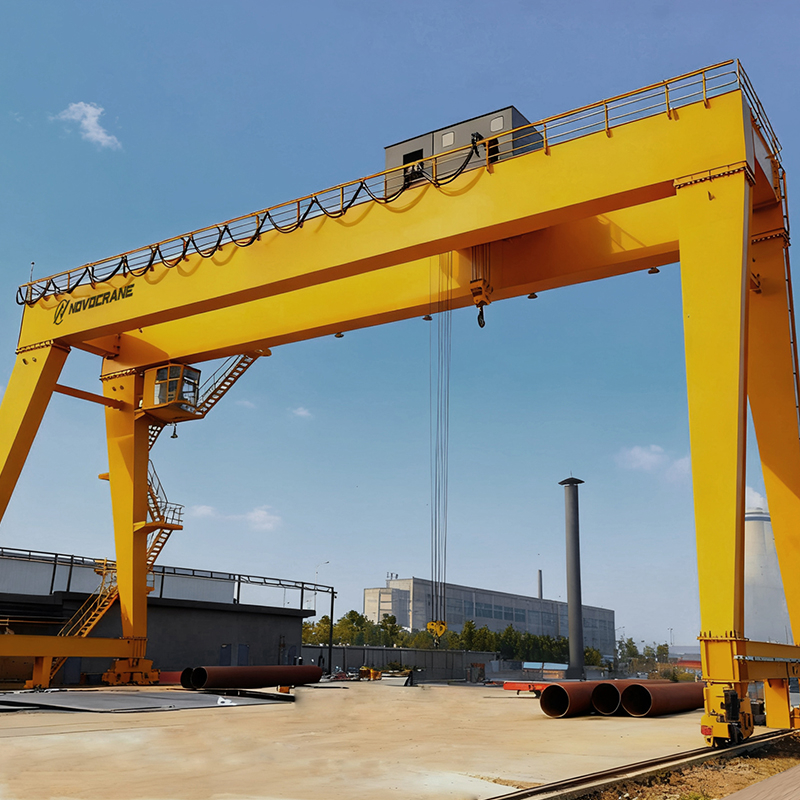
Steel models are engineered for high-capacity industrial applications, typically ranging from 1 to 15 tons or more. They offer maximum durability and structural rigidity, making them suitable for harsh environments, heavy-duty manufacturing, and outdoor yards. The primary trade-off is increased dead weight. A 5-ton steel gantry is exceptionally heavy, which reduces manual mobility and often requires mechanical assistance, such as a forklift or tugger, for relocation across the shop floor.
Aluminum frames feature lightweight, corrosion-resistant structures. They are ideal for cleanrooms, water treatment facilities, HVAC installations, and scenarios requiring single-operator assembly. While they offer superior portability and can often be broken down to fit in the back of a service truck, they generally have lower maximum load capacities compared to steel counterparts (usually capping out around 2 to 3 tons) and carry a higher initial material cost.
Adjustable models feature telescoping uprights and adjustable I-beams. This flexibility is critical for navigating low doorways, operating on uneven terrain, or accommodating variable lift requirements across different facility areas. You can lower the unit to roll it under a mezzanine, then raise it to lift a tall component. Fixed models maintain rigid, standardized dimensions. They are best suited for dedicated, repetitive lifting tasks within predictable spatial constraints where adjustability is unnecessary.
Trackless, caster-based configurations offer maximum directional flexibility for open-floor navigation, allowing operators to steer the unit anywhere within the facility. Track-mounted models utilize V-groove casters restricted to fixed floor tracks (like inverted angle iron). This setup provides precise, repetitive linear movement and often supports higher lifting capacities by distributing the load across a dedicated rail system, preventing floor damage from high point loads.
Calculating the required rated load capacity involves determining the maximum load weight while strictly factoring in the combined weight of all rigging hardware. You must include the weight of the hoist, the trolley, lifting beams, slings, and shackles. It is essential to account for dynamic loading, potential shock loads during lifting, and the expected duty cycle to prevent structural failure. Never size a crane exactly to your heaviest load; always build in a safety margin.
Clear span refers to the usable space between the uprights, which must accommodate the load width and allow operators to maneuver safely. Overall width dictates whether the unit can navigate facility aisles and doorways. Under-beam height determines the maximum lift height, but buyers must subtract the headroom taken up by the hoist and trolley assembly to calculate the true usable lift height. Failing to account for hoist headroom is a common specification error.
Selecting the right assembly method impacts operational efficiency and safety. Knockdown, bolt-together frames are suitable for semi-permanent setups where the unit will rarely be disassembled. Quick-release pin joints allow for rapid, tool-free field deployment. Erection safety requires evaluating the personnel and equipment needed to safely erect the structure. Options include manual assist winch kits, auxiliary forklifts, or simple two-person ground-up assembly for lightweight aluminum models.
Analyzing the total physical weight of the disassembled components is necessary to determine transportation limits. This assessment ensures compatibility with field service vehicles and confirms whether single-operator handling is feasible. If a steel I-beam weighs 800 pounds, you cannot manually assemble it in the field without lifting aids. Always verify the weight of the heaviest single component before purchasing a system intended for portable field use.
Selecting caster materials based on floor conditions is critical for safe movement and floor preservation.
Polyurethane casters suit smooth concrete and epoxy floors, offering good load distribution and debris rejection.
V-groove wheels fit floor tracks for guided movement.
Pneumatic or foam-filled tires handle rough, uneven, or outdoor terrain.
Steel wheels offer the highest capacity but will damage unprotected concrete floors over time.
Four-position swivel locks and heavy-duty wheel brakes are essential for maintaining load stability during static lifts.
Evaluating hoist options involves choosing between manual chain hoists for infrequent, precise lifts and electric or pneumatic hoists for high-frequency operations. Trolley specifications must match the specific I-beam or enclosed track profile of the gantry. Push trolleys are fine for light loads, but geared or motorized trolleys are necessary for safely traversing heavy loads along the beam without operator strain.
Specifying power delivery is necessary for motorized gantries or high-duty-cycle electric hoists. Options include spring-driven cable reels, festoon systems running along the I-beam, or battery-operated systems for remote field use where standard power is unavailable. Ensure the power supply method does not create a tripping hazard or interfere with the load path.
Workshops utilize these systems for heavy tooling changes on injection molding machines, localized assembly line support, and general material transport. Their mobility allows operators to service multiple machines across a large bay without installing permanent overhead structures. When a machine goes down, the maintenance team can roll the lifting equipment directly to the problem area, pull the motor or gearbox, and transport it to the repair bay.
Compact, adjustable-height models are heavily leveraged in heavy-duty automotive and fleet repair. They enable precise engine extraction, heavy transmission servicing, and under-chassis component handling within low-headroom garages. Mechanics can adjust the height to clear the vehicle hood, perform the lift, and then lower the load for safe transport across the shop floor.
These industries deploy aluminum or specialized stainless steel models equipped with non-marking polyurethane casters. These materials meet strict sanitation, washdown, and particulate emission standards required in controlled environments. Aluminum frames do not rust or shed paint flakes, making them ideal for food-grade facilities where contamination control is heavily regulated.
Field crews leverage knockdown aluminum models for transportability to remote sites. They are essential for rooftop HVAC installations, utility vault access, pump station maintenance, and equipment repair in locations lacking permanent lifting infrastructure. The ability to carry the disassembled components up a flight of stairs or into a confined space makes them invaluable for field rigging operations.
Deploying high-capacity point loads via casters requires assessing concrete slab thickness, PSI ratings, and sub-surface integrity. A 10-ton load distributed over four small steel casters creates massive point pressure. Failure to verify floor strength can result in concrete cracking, spalling, caster sinkage, and catastrophic load shifts. Always consult a structural engineer if you are unsure about your floor's capacity to handle heavy rolling loads.
Adherence to ASME B30.17 standards governing the design, testing, and operation of overhead and gantry cranes is mandatory. Facilities must comply with requirements for initial load testing (typically 125% of the rated capacity), visible capacity labeling on both sides of the beam, and documented operator training programs. Regular inspections must be logged and kept on file to maintain a safe working environment and pass safety audits.
A major pitfall is the "moving under load" fallacy. Standard models are designed to be moved to the load, locked in place, and used for static lifting. They are not designed to transport the load while suspended, unless specifically engineered and rated for such dynamic use. Moving a suspended load shifts the center of gravity and can cause the entire structure to tip. Another risk involves inspection failures. Neglecting pre-shift inspections of critical failure points, including casters, locking pins, and structural welds, significantly increases the risk of accidents.
Implementing a portable lifting system requires careful planning and precise specification. Backed by extensive experience in electric hoists, crane components, and application-specific lifting systems, Novocrane is a professional manufacturer and service provider committed to advanced engineering, strict quality control, and dependable performance. By combining technical expertise with practical industry knowledge, the company helps customers develop safer, more efficient lifting solutions for a wide range of operating environments. To ensure you select the right equipment for your facility, follow these actionable steps:
Calculate your maximum required capacity, ensuring you include the weight of all hoists, trolleys, and rigging hardware.
Measure your facility’s lowest doorways, narrowest aisles, and maximum ceiling heights to determine your dimensional constraints.
Inspect your floor conditions and select the appropriate caster material to prevent concrete damage and ensure smooth rolling.
Schedule a site evaluation with a certified rigging engineer to verify floor loading capacities before purchasing high-tonnage models.
A: Standard models are generally not designed to be moved while under load. They should be positioned over the load, locked in place, and used for static lifting. Moving a suspended load requires a system specifically engineered, braced, and rated for that dynamic application.
A: A portable gantry features two uprights and a spanning beam, offering mobility across a facility. A jib crane consists of a pivoting horizontal arm mounted to a fixed wall or floor pillar, restricting its lifting area to a specific semicircular radius.
A: Measure the maximum width of the loads you intend to lift and add sufficient clearance on both sides for safe handling and rigging. Ensure this calculated clear span also allows the overall width of the equipment to navigate your facility's aisles and doorways.
A: Aluminum models offer excellent strength-to-weight ratios but generally have lower maximum load capacities than heavy-duty steel models. Steel is preferred for high-capacity industrial lifts, while aluminum is chosen for portability, field deployment, and corrosion resistance.
A: Routine maintenance includes inspecting structural welds for cracks, checking locking pins and fasteners for secure engagement, ensuring casters rotate and lock smoothly, and verifying that the hoist and trolley operate without binding or excessive wear.
A: Many portable aluminum models utilize quick-release pin joints, allowing two workers to assemble the unit in 15 to 30 minutes without specialized tools. Larger or adjustable models may require manual assist winches or a forklift for safe erection.
A: Yes, they must comply with OSHA and ASME standards. This includes an initial load test before first use, visible capacity labeling, and regular, documented inspections by qualified personnel to ensure ongoing safe operation.