
Views: 0 Author: Site Editor Publish Time: 2026-02-04 Origin: Site
Are you unsure which crane suits your needs: a gantry crane or an overhead bridge crane? Both serve similar purposes, but their differences are crucial when choosing the right one for your business.
In this article, we’ll break down the key differences between a gantry crane and an overhead bridge crane. You’ll learn how to decide which crane fits your specific lifting needs.
An overhead bridge crane is a stationary lifting device used to move heavy materials within industrial facilities. It consists of a horizontal bridge mounted on fixed tracks supported by building structures such as ceiling beams or columns. The crane’s hoist moves along this bridge to lift and transport materials across the work area, ensuring precise and stable handling of heavy loads.
These cranes are ideal for permanent installations in factories and warehouses, where high-capacity lifting is required for heavy-duty tasks.
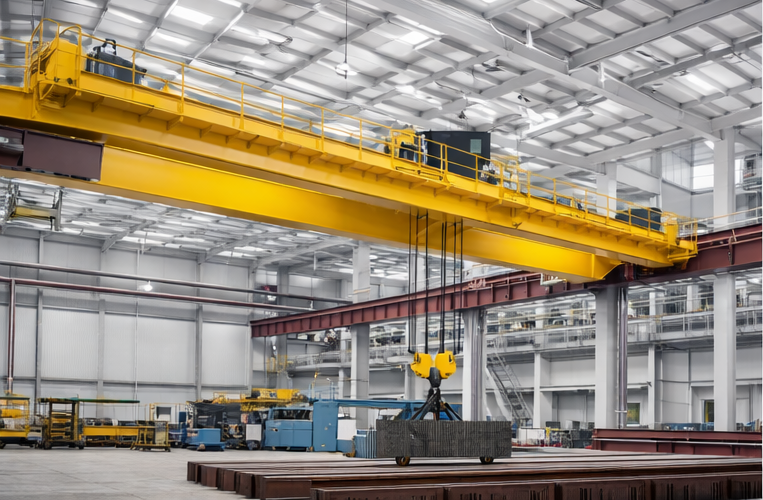
Overhead bridge cranes can lift loads ranging from 5 tons to over 100 tons, depending on the application. Their ability to handle heavy-duty materials makes them perfect for industries like steel manufacturing, automotive assembly, and large-scale warehousing.
Load Capacity | Typical Applications |
5 - 10 tons | Automotive, Steel Manufacturing |
10 - 50 tons | Heavy Manufacturing, Mining |
50 - 100+ tons | Industrial, Shipbuilding |
These cranes are designed for indoor use, permanently installed in buildings with strong ceiling structures. Their fixed nature allows them to efficiently move materials across long distances without obstructing other operations.
The crane operates along a track system mounted to the ceiling, which must be strong enough to support both the crane and its heavy loads. The tracks are custom-designed based on facility needs, ensuring smooth operation. Proper structural reinforcement is required for the building to accommodate the crane's weight and lifting capabilities.
Overhead bridge cranes are primarily used in industries that require precise, high-capacity lifting of heavy materials over a wide area.
● Steel Manufacturing: Used for moving heavy steel beams and plates within mills.
● Automotive Assembly: Essential for lifting and positioning automotive parts along assembly lines.
● Shipyards: Handling large components during ship construction and repair.
These cranes are crucial in industrial environments where heavy lifting, high precision, and space optimization are key to improving workflow and minimizing risks associated with manual handling.
Gantry cranes are self-supporting overhead cranes that operate with freestanding legs, offering flexibility and mobility compared to traditional bridge cranes. These cranes are ideal for various indoor and outdoor applications where permanent infrastructure is unavailable or unnecessary.
A gantry crane is an overhead crane with vertical legs that rest on the ground, allowing it to move across tracks or wheels. Unlike overhead bridge cranes, which require fixed building support, gantry cranes are independent and can operate in environments without structural support.
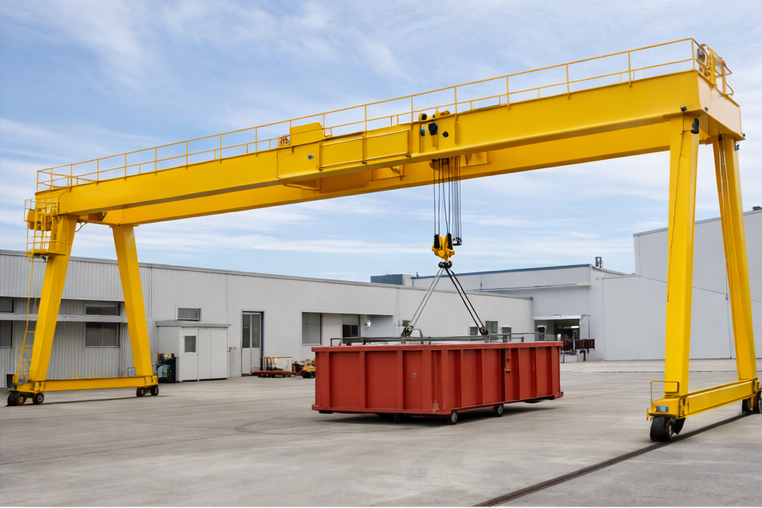
Gantry cranes are entirely self-supporting, making them suitable for temporary installations or outdoor environments. The crane’s design allows it to function independently, ensuring mobility and flexibility in applications where traditional overhead cranes are impractical.
Mounted on wheels or tracks, gantry cranes are highly mobile. Smaller models are portable, while larger ones move along tracks, allowing for greater flexibility in various work environments.
Gantry cranes come in different configurations to suit a wide range of industrial needs. They are known for their mobility, flexibility, and cost-effectiveness.
The crane’s legs are freestanding, enabling movement on tracks or wheels. This makes them perfect for industries where the crane must be moved across a facility or outdoor site, offering more flexibility than stationary cranes.
Crane Type | Support | Mobility | Applications |
Portable Gantry | Freestanding, on wheels | Fully mobile | Light-duty tasks, workshops |
Semi-Gantry | One leg on track | Partially mobile | Smaller workspaces, light industry |
Full Gantry | Fixed legs on track | Stationary | Heavy-duty outdoor lifting |
● Full Gantry Cranes: Ideal for heavy-duty lifting, often used outdoors in environments like shipyards and construction sites.
● Semi-Gantry Cranes: Feature one leg on a track and the other supported by a building, offering mobility and saving space in smaller facilities.
● Portable Gantry Cranes: Lightweight and mounted on wheels or casters, these cranes can be moved easily within smaller spaces or across various sites.
Gantry cranes are widely used in industries that require flexible, cost-effective, and mobile lifting solutions.
These cranes are ideal for outdoor environments, such as construction sites and material storage yards, where building infrastructure isn’t available. Their mobility allows for quick setup and relocation, making them perfect for temporary applications.
Unlike bridge cranes, gantry cranes can be assembled and disassembled easily, making them highly adaptable for temporary tasks. They are often used in construction, metal fabrication, and maintenance projects, where portability and flexibility are essential.
Application | Benefits | Example Industries |
Construction | Portable, flexible | Civil engineering, infrastructure |
Storage and Yard Handling | High mobility, large capacity | Shipping, warehousing |
Fabrication and Repair | Easily movable, adaptable | Metal fabrication, maintenance |
The fundamental difference between gantry cranes and overhead bridge cranes lies in their support systems. Overhead bridge cranes are supported by the building structure, with tracks fixed to ceiling beams or columns. This permanent installation allows them to handle heavy loads in large, well-constructed industrial spaces.
In contrast, gantry cranes are freestanding systems supported by their own legs, typically designed in an A-frame shape. These legs may be equipped with wheels or mounted on rails, offering mobility and flexibility for use in different environments, such as construction sites, maintenance yards, or warehouses without the need for building integration.
Feature | Overhead Bridge Crane | Gantry Crane |
Support | Building columns or beams | Self-supporting legs |
Installation | Permanent and fixed | Portable or mobile |
Gantry cranes excel in mobility, making them suitable for industries requiring temporary or flexible setups. Smaller gantry cranes can be moved manually, while larger versions operate on tracks or rails, allowing them to be relocated easily within a facility or even between sites.
Overhead bridge cranes, however, are fixed in place once installed. Their operation is limited to a specific track system mounted on the building structure, meaning they can’t be relocated or moved once in place. While this offers stability for heavy-duty tasks, it limits flexibility.
Overhead bridge cranes are primarily used indoors due to their reliance on the building structure for support. They are ideal for large-scale, heavy-duty operations where the crane needs to move materials over long distances within a fixed indoor space, such as in steel manufacturing or automotive assembly plants.
Gantry cranes, by contrast, offer versatility for both indoor and outdoor applications. They are widely used in environments like construction sites, shipyards, and ports, where outdoor operation is necessary and the crane must be easily moved or relocated.
Application Environment | Overhead Bridge Crane | Gantry Crane |
Ideal Use | Indoor facilities, warehouses | Indoor and outdoor settings |
Flexibility | Fixed location | Can be relocated and repositioned |
Installing an overhead bridge crane often requires significant investment in building infrastructure, including reinforcing beams or columns to support the crane and its load. This process can be costly and time-consuming, making bridge cranes ideal for long-term, high-capacity lifting operations in permanent facilities.
Gantry cranes are generally more affordable to install because they do not require modifications to the building structure. Their quick assembly and ease of relocation make them more cost-effective for temporary or mobile applications, which is a significant advantage for industries with changing needs or rented spaces.
Overhead bridge cranes are designed for heavy-duty lifting and can handle large capacities, often ranging from 10 tons to over 100 tons, depending on the model. Their long span, supported by the building structure, makes them suitable for large-scale manufacturing operations or warehouses that require the transportation of heavy materials over long distances.
Gantry cranes, while still capable of lifting heavy loads, are generally used for lighter duties. Their lifting capacity typically ranges from 1 to 15 tons, though some heavy-duty models used in port operations can handle more. Their span is often shorter, and they are more suited for mobile applications where flexibility is prioritized over high load capacity.
Feature | Overhead Bridge Crane | Gantry Crane |
Lifting Capacity | Up to 100+ tons | 1 to 15 tons (up to 50 tons for heavy-duty models) |
Span | Longer spans for large facilities | Shorter spans, flexible usage |
Suitable Environments | Heavy-duty, large-scale operations | Flexible, lighter-duty, outdoor, and temporary uses |
Overhead bridge cranes offer robust, permanent solutions for heavy-duty, fixed-location operations. Gantry cranes, on the other hand, provide greater flexibility, mobility, and cost-effectiveness, making them ideal for industries requiring versatility and quick setup. By understanding these key differences, businesses can choose the crane that best meets their operational requirements.
When deciding whether to opt for an overhead bridge crane, it's essential to consider factors such as the need for permanent installations, heavy lifting capacities, and the specific industry requirements.
Overhead bridge cranes are the ideal solution when you need a permanent, high-capacity installation. These cranes are designed to stay fixed in one location, making them perfect for environments where consistent, high-volume lifting is required. The fact that they rely on the building structure for support allows them to handle extremely heavy loads, often up to 100 tons or more, which makes them indispensable in large-scale manufacturing operations or facilities where maximum lifting power is critical.
Overhead bridge cranes are particularly valuable in industries such as:
● Steel Manufacturing: Used to move heavy steel beams, plates, and coils within the facility.
● Automotive Assembly: Employed in transporting automotive parts along production lines.
● Material Handling: Ideal for moving large packages or equipment in large warehouses.
These industries rely on overhead bridge cranes for their ability to manage heavy loads over long distances, increasing operational efficiency and safety.
Gantry cranes, due to their flexibility and mobility, are ideal for different operational requirements, especially when temporary installations or relocation is needed.
Gantry cranes are the perfect choice when flexibility is key. Their self-supporting legs and mobile design allow them to be easily moved across facilities or even between job sites. They provide an excellent solution for industries that need cranes to be relocated frequently, or for operations where fixed installations are not suitable.
Gantry cranes are widely used in:
● Construction: For lifting materials and equipment in temporary setups.
● Shipbuilding: Used to move large ship components across outdoor or confined areas.
● Maintenance Work: Easily moved to different parts of a facility as needed.
Gantry cranes are also ideal for temporary installations or environments with limited space, such as:
● Construction Sites: These cranes can be assembled quickly and relocated as needed, making them perfect for lifting heavy materials in areas with limited or changing space.
● Confined Spaces: For facilities where overhead structures are not feasible or necessary, gantry cranes provide a portable solution.
● Outdoor Use: Since they don’t rely on a building’s structure, gantry cranes can be used in open environments, such as shipyards and port operations, where flexibility is crucial.
These cranes allow for easy movement and quick assembly, making them a cost-effective solution for businesses that need versatile, adaptable lifting options.
This article compares gantry cranes and overhead bridge cranes. Overhead bridge cranes are fixed installations, ideal for heavy-duty, high-capacity lifts. Gantry cranes, however, are mobile and versatile, making them perfect for temporary or outdoor use.
When choosing the right crane, consider your lifting needs, installation space, and whether mobility is essential. Novocrane (Suzhou) Co., Ltd. provides both crane solutions, offering high-quality products designed to meet diverse industrial requirements, ensuring optimal performance and flexibility.
A: An overhead bridge crane is used for heavy-duty lifting in industrial settings. It moves materials across fixed tracks mounted to building structures, ideal for factories, warehouses, and large-scale manufacturing.
A: The main advantage of an overhead bridge crane is its high lifting capacity and stability. It is perfect for permanent installations that require consistent, heavy lifting across long distances in indoor environments.
A: Typically, an overhead bridge crane is designed for indoor use. It relies on a building’s structure for support and isn’t suited for outdoor environments like gantry cranes.


