
Views: 0 Author: Site Editor Publish Time: 2026-02-04 Origin: Site
Have you ever wondered how factories move heavy materials with precision? An overhead bridge crane is the key to making that happen. These cranes are vital in many industries, helping businesses lift and transport heavy loads effortlessly.
In this article, we’ll explore what an overhead bridge crane is, its functions, and the various applications it serves. You’ll learn how these cranes improve safety, efficiency, and productivity in industrial settings.
An overhead bridge crane is a complex system designed for lifting and moving heavy loads in industrial environments. Its design includes several key components, each contributing to the crane's efficiency, safety, and performance. Below, we’ll delve into the individual parts that make up an overhead bridge crane, focusing on their functions and how they contribute to the crane's overall operation.
The main girders are the load-bearing structures that span the width of the building. These components are responsible for supporting the crane's bridge and the weight of the load being lifted. The design of the girder affects the crane's capacity, stability, and application suitability.
Feature | Single Girder | Double Girder |
Design | One main beam | Two main beams (parallel) |
Load Capacity | Up to 32 tons | 50 tons and above |
Application | Lighter, less complex operations | Heavy-duty, large-scale industrial tasks |
Space Requirements | Requires less overhead space | Requires more overhead space |
Cost | More affordable | More expensive due to added complexity |
The hoist and trolley are responsible for the lifting and horizontal movement of materials.
● Hoist:
○ The hoist is the lifting mechanism, raising and lowering loads using either a wire rope or chain.
○ Powered by electric motors, pneumatic systems, or manual operation, hoists are essential for precise load control.
○ Lifting Capacity: Varies based on crane design; typical ranges are from 1 ton to over 500 tons for heavy-duty cranes.
● Trolley:
○ The trolley is mounted on the girder and moves the hoist horizontally along the crane.
○ Top-Running Trolley: Moves along rails mounted on the top of the girder, ideal for larger and heavier applications.
○ Underhung Trolley: Runs along the bottom of the girder, providing a more compact design ideal for facilities with lower clearance.
Movement Characteristics:
● Horizontal Movement: Trolleys enable the precise lateral positioning of loads.
● Vertical Movement: Hoists control the lifting and lowering motion.
End trucks are crucial for enabling the crane to travel along its runway rails. They are located at each end of the bridge girder and consist of wheels that ride along the rails mounted to the building structure.
● Function:
○ The end trucks allow the crane to travel longitudinally along the runway, facilitating the movement of heavy loads over the entire workspace.
○ They absorb the weight and stress from the crane’s movement, ensuring stable and smooth operation.
End Truck Features | Standard Configuration | High-Capacity Configuration |
Wheel Number | 2 or 4 wheels | 4 to 8 wheels |
Movement Type | Longitudinal (forward-backward) | Longitudinal with added capacity |
Used For | Light to moderate loads | Heavy-duty applications |
Control systems allow the operator to manage all of the crane’s movements safely and efficiently.
● Remote Control:
○ Operators can manage crane movements from a distance using wireless devices.
○ Ideal for large operations or hazardous environments, providing increased safety.
● Pendant Control:
○ A hand-held control device connected by a cable to the crane.
○ Commonly used for smaller-scale cranes, giving operators direct control within close proximity.
● Cabin Control:
○ A cabin mounted on the crane for the operator to control all functions directly.
○ Used for larger cranes with complex operations, providing a comprehensive control panel for all movements.
Electrification and bumpers are essential for ensuring safe and efficient crane operation.
● Electrification:
○ Power Supply: Overhead cranes typically rely on insulated conductor bars or festoon systems for their power supply. These systems connect the crane to the building’s electrical infrastructure.
○ Efficiency: These electrification systems ensure continuous, efficient operation, allowing the crane to function for extended periods without interruption.
● Bumpers:
○ Function: Bumpers are installed at critical points on the crane (bridge, trolley, and runway) to absorb impact and ensure smooth stops when the crane reaches the end of its travel.
○ Safety: These components protect both the crane and its surroundings from damage caused by sudden or uncontrolled movements.
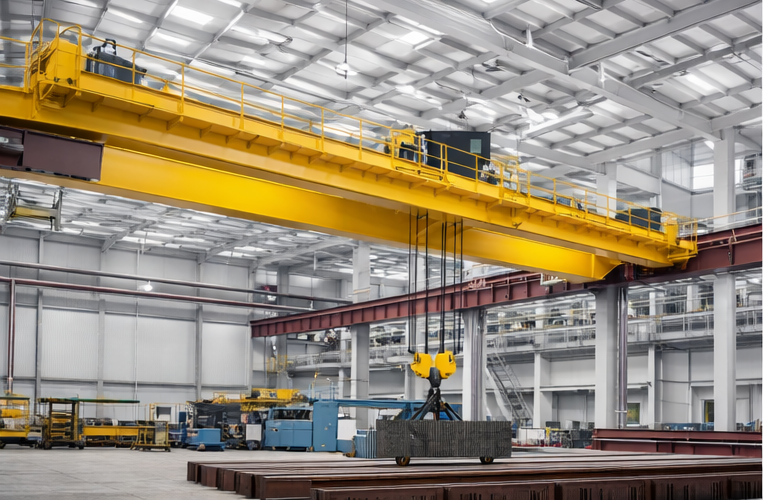
Overhead bridge cranes are designed to handle various lifting tasks, and selecting the right type for your operation depends on factors such as load capacity, building structure, and operational requirements. There are several types of overhead cranes, each suited to different industrial applications. In this section, we’ll explore the main types, focusing on their design differences and suitable use cases.
The single girder and double girder designs are two of the most common configurations for overhead bridge cranes. The choice between these two designs largely depends on the specific lifting needs, space constraints, and the load requirements of the facility.
Design Feature | Single Girder | Double Girder |
Load Capacity | Lighter loads, up to 32 tons | Heavier loads, up to 500 tons |
Cost | More cost-effective | Higher initial investment |
Space Requirements | Requires less overhead clearance | Requires more headroom |
Suitable Applications | Ideal for small-to-medium scale operations | Best for heavy-duty industrial tasks |
Span | Shorter spans, typically 3-31.5 meters | Longer spans, typically 10.5-31.5 meters |
The choice between top running and under running cranes primarily depends on the building structure and the facility’s space limitations.
Feature | Top Running | Under Running |
Load Capacity | Higher capacity (up to 500 tons) | Suitable for lighter loads (up to 32 tons) |
Space Requirements | Requires more vertical clearance | Requires less overhead space |
Ideal Use | Large facilities, heavy-duty tasks | Smaller spaces, less heavy lifting |
Design Complexity | More complex with greater structural needs | Simpler design for compact spaces |
Process cranes are designed for continuous or heavy-duty operations where the crane is in constant use. These cranes are engineered for high capacity and often perform repetitive tasks in harsh environments.
● Applications:
○ Process cranes are used in industries such as automotive manufacturing, steel mills, and container yards where high-frequency operations are essential.
○ These cranes are designed to handle specific, repetitive tasks, such as lifting heavy materials, transporting large equipment, or handling molten metals.
● Design Features:
○ Process cranes are typically equipped with double girder configurations to handle high loads.
○ They are often top-running cranes with high-duty cycle motors and robust safety systems for continuous operation.
● Example: A steel mill may use process cranes to move molten steel ladles, where the crane operates under extreme heat conditions and needs to lift and transport heavy steel products efficiently.
Modular cranes offer a cost-effective solution for smaller-scale operations. These cranes are designed for facilities that require flexibility, affordability, and lower operational costs.
● Applications:
○ Modular cranes are ideal for small manufacturing plants, machine shops, and workshops that do not require the heavy-duty capabilities of a process crane.
○ They provide a basic, customizable crane solution with lighter capacity (up to 32 tons), making them perfect for less intensive lifting tasks.
● Design Features:
○ Typically, modular cranes are single girder systems with simplified hoist and trolley components.
○ The modular design allows for easy customization and future upgrades if the facility’s needs change.
● Example: A small automotive workshop might use a modular crane to handle engine blocks or parts, providing efficiency without the higher costs of more complex cranes.
Overhead bridge cranes are vital in various industries for improving material handling and optimizing workflows. These cranes are flexible and versatile, making them ideal for use in multiple sectors. Below, we’ll explore the key applications of overhead bridge cranes in manufacturing, warehousing, logistics, and heavy industries.
In manufacturing environments, overhead bridge cranes play a crucial role in streamlining the production process. They are commonly used in assembly lines, where heavy components must be moved efficiently and safely.
● Assembly Lines: Overhead cranes help transfer heavy parts like engine blocks, machinery components, or large equipment across different stages of the assembly process. By automating these tasks, cranes eliminate the need for manual labor, reducing the risk of injury and increasing the speed of production.
● Machinery Handling: Cranes are essential for moving heavy machinery within a facility. Whether it’s lifting machines for maintenance, positioning parts on production lines, or relocating large equipment, overhead cranes improve the efficiency of machinery handling, minimizing downtime and ensuring smooth operations.
In warehousing and logistics operations, overhead bridge cranes significantly improve the movement and storage of materials, maximizing available space and reducing operational bottlenecks.
● Loading and Unloading: Overhead cranes are commonly used to load and unload goods from trucks, containers, or storage areas. Their ability to move materials quickly and accurately allows for faster turnaround times, improving operational efficiency.
● Storage Optimization: By utilizing overhead space, bridge cranes help warehouses optimize floor space. This is particularly beneficial in facilities with limited space, as it reduces the need for large aisle spaces while still allowing for efficient material handling.
● Inventory Management: Cranes can assist in moving bulk goods like pallets, containers, and oversized products. This helps to optimize inventory storage and organization, ensuring that products are stored safely and can be easily accessed when needed.
Overhead bridge cranes are indispensable in heavy industries where they are used to handle massive loads and operate in harsh environments. These industries require cranes that can lift and move heavy-duty materials with precision and safety.
Industry | Primary Use | Benefits |
Steel Mills | Transporting molten steel and heavy coils | Safety in extreme environments, efficient material movement |
Paper Mills | Moving large rolls of paper and machinery | Improved workflow, reduced manual handling |
Shipyards | Moving heavy ship parts for assembly or repair | High lifting capacity, efficiency in confined spaces |
The use of overhead bridge cranes brings numerous benefits to industrial and commercial operations. From space efficiency to increased safety, these cranes offer significant advantages that can help businesses streamline their material handling processes.
One of the most significant benefits of overhead bridge cranes is their ability to save valuable floor space. By utilizing the overhead area, these cranes move materials without occupying the ground level.
● Vertical Movement: By running on overhead tracks, cranes can lift and move heavy loads in three dimensions (up, down, and horizontally), freeing up floor space for other activities such as storage or employee movement.
● Compact Design: Overhead cranes allow for more compact designs in warehouses or factories, making the most of available vertical space and optimizing storage capacity.
● Increased Operational Flexibility: With floor space freed up, businesses can use their facilities more efficiently, adapting to new workflows and scaling operations without expanding their physical space.
Safety is a paramount concern in industrial settings, and overhead bridge cranes contribute to a safer working environment by reducing the need for manual handling and allowing remote operation.
● Remote Control: Cranes can be operated via pendant controls, remote devices, or even from a control cabin, keeping operators at a safe distance from potential hazards.
● Reduced Risk of Injury: Overhead cranes minimize manual handling, reducing the likelihood of repetitive strain injuries or accidents caused by handling heavy materials manually. By automating the lifting process, the crane also reduces the risk of accidents associated with forklifts or other material handling equipment.
Overhead bridge cranes significantly enhance productivity by automating the material handling process, making it faster and more efficient than manual labor or forklifts.
● Faster Operations: Overhead cranes can work 2-3 times faster than human labor or forklifts, improving the overall speed of material handling within a facility.
● Higher Throughput: By automating the lifting, moving, and positioning of materials, overhead cranes can increase throughput, allowing businesses to handle more tasks in less time.
● Precision Handling: These cranes allow for precise movement and placement of materials, ensuring that each load is handled with accuracy and reducing the risk of material damage or rework.
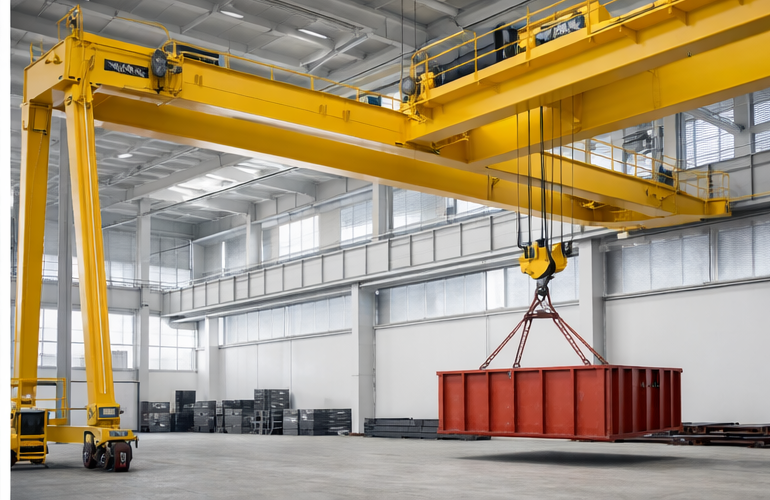
Selecting the right overhead bridge crane for your facility is a critical decision that can enhance operational efficiency, safety, and productivity. Here’s a comprehensive guide to help you choose the best crane based on key factors such as load requirements, environmental conditions, frequency of use, and available space.
The first step in selecting a crane is understanding your capacity and load requirements. Overhead cranes are designed to handle different lifting capacities, and it’s crucial to choose one that can manage the heaviest loads in your facility.
Capacity & Load Type | Recommended Crane Type | Applications |
Up to 32 tons | Single Girder Crane | Light to medium-duty applications |
50-500 tons | Double Girder Crane | Heavy-duty tasks, large industries |
The environment in which the crane will be used plays a major role in its design and functionality. Cranes are available for both indoor and outdoor applications.
● Indoor Use: Top-running cranes are preferred for indoor environments as they offer higher capacity and span, but they require more overhead space.
● Outdoor Use: Gantry cranes are ideal for outdoor applications because they have legs for support, making them more versatile in open spaces or areas where overhead structures are not feasible.
Understanding how often the crane will be used helps determine whether a process crane or modular crane is more suitable.
● Process Cranes: Designed for high-frequency operations, these cranes are built to handle continuous or near-continuous work cycles. They are robust and designed for heavy-duty applications.
● Modular Cranes: Ideal for lighter, less frequent use, modular cranes are cost-effective and flexible, perfect for small manufacturing plants or workshops.
Finally, considering the space and design limitations is crucial for crane installation. Your building’s height and the available clearance will influence the type of crane you select.
● Low Ceilings: In facilities with limited vertical space, single girder under-running cranes are a suitable option as they require less overhead clearance.
● High Ceilings: For larger facilities with ample clearance, double girder top-running cranes are ideal as they can support heavier loads and cover larger spans.
When selecting an overhead bridge crane, it's essential to consider factors like capacity, environment, and space. These cranes are crucial in boosting efficiency, safety, and productivity in industries such as manufacturing and warehousing.
At Novocrane (Suzhou) Co., Ltd., we offer high-quality overhead bridge cranes designed to meet the unique needs of various industries. Our cranes provide unmatched reliability and performance, ensuring smooth operations and enhanced safety in every environment.
A: An overhead bridge crane is primarily used for lifting and moving heavy materials across a facility, typically in industrial settings like manufacturing, warehousing, and construction.
A: The overhead bridge crane operates by moving along a fixed runway with a hoist and trolley system, allowing it to lift and position heavy loads with precision.
A: The main components of an overhead bridge crane include the bridge, hoist, trolley, end trucks, and control system, each contributing to the crane's functionality and load handling capabilities.
A: Overhead bridge cranes are widely used in industries such as manufacturing, logistics, steel mills, and construction for efficient material handling and heavy lifting.


